Personalized chart
Enter age and weight to see your dog's unique trajectory.
How big will my Rottweiler get? Predict adult weight and track your puppy's development.
We picked these products to help you take better care of your dog day to day—from sleep to safer walks, easier feeding, and a sensible setup at home. Each slot is narrowed to highly rated picks that match your dog’s size and stage.
Roomy crates
Comfy beds
Walk-ready harnesses
Slow feeders
Rotties mature slowly and feel everything deeply, use your projection alongside lean growth, careful exercise, and training that builds confidence without fear.
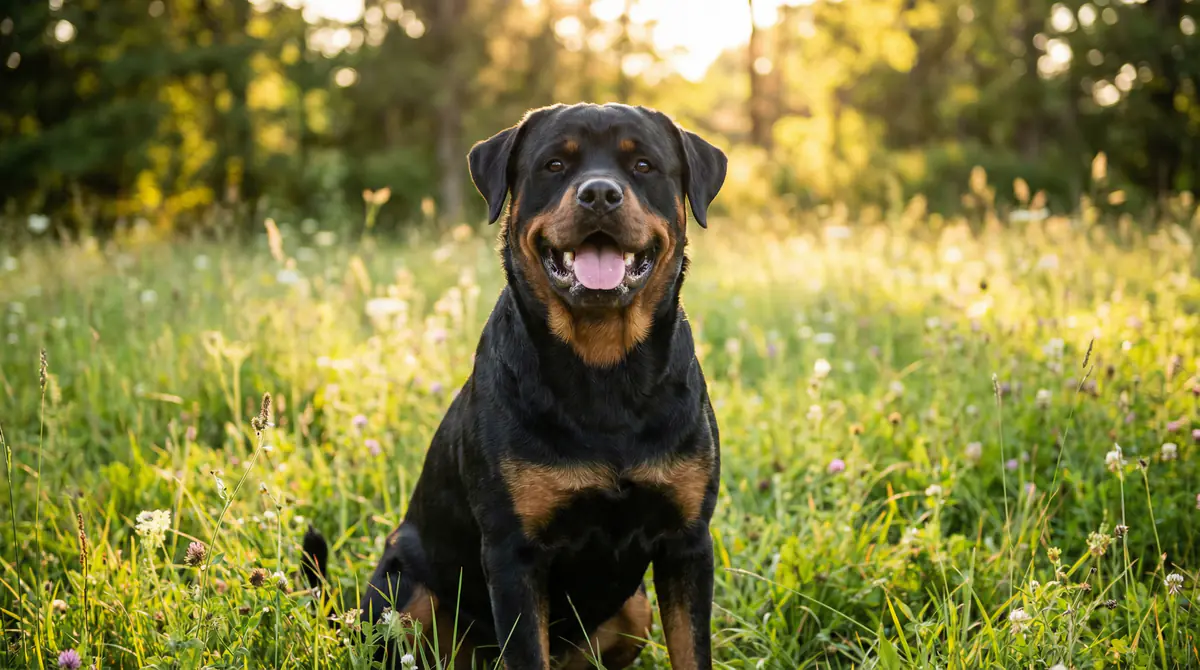
Adult breadth may not arrive until 2 to 3 years; a “small” teen can still land large, trends beat snapshots.
Do not push calories to accelerate size; excess weight on fast growth is hard on joints.
If your pup is ahead of the curve visually, check treats, measurement, and neuter timing effects with your vet.
Heavy coat can hide weight changes; your vet can help you learn a safe way to monitor condition at home.
Limping or unusual fatigue after play is worth discussing with your veterinarian.
Growth spurts can look awkward; pain looks different.
Puppyhood is not one stage. It is a stack of different problems and wins. Use this like a timeline, not a rigid rulebook.
Gentle handling, routine, safe socialization.
Skills + impulse control.
Consistency is everything.
Strength arrives late, patience.
We picked these products to help you take better care of your dog day to day—from sleep to safer walks, easier feeding, and a sensible setup at home. Each slot is narrowed to highly rated picks that match your dog’s size and stage.
Feeding, exercise, training, home setup, and prevention. Each block is written for people who just checked their puppy's weight curve.
Large breed puppy nutrition if your vet recommends it.
Measured meals; slow switches.
Do not chase “impressive size” with extra calories; lean growth is the goal your vet can help you judge.
Hills, varied walking, tug with rules, swimming when safe.
Avoid forced running programs on pavement for babies.
Prefer free play and sniffing over repetitive jumping or stairs while growth plates are open.
Teach neutrality at windows and fences.
Reward quiet; do not accidentally reward alarm barking with yelling.
Harsh corrections often backfire; clarity, consistency, and calm leadership scale better as the dog grows.
Predictable routines reduce anxiety.
Management beats nagging: gates, crates, and leashes prevent rehearsal of jumping and door charging.
Weight logs help vet visits.
Discuss screening timelines appropriate to your region/breeder.
A short home video of intermittent limping helps your vet see what you see.
If you are unsure, call your veterinarian, especially with puppies. This list is not complete and does not cover every situation. It is a general reminder of signs many clinics want to hear about.
General educational information only. It is not medical advice and does not replace an exam or treatment plan from a licensed veterinarian. Estimates and tips cannot diagnose illness or emergencies; contact your vet with any health concerns.
Loyal, loving, and confident guardian
Working
Large
8-10 years
24 months
Weight management is vital to prevent early-onset joint issues. Avoid high-calorie 'bulking' foods during puppyhood.
Rottie
95-135 lbs
24-27" tall
80-100 lbs
22-25" tall
Rottweilers are one of the slowest-growing large breeds. They may not reach their final muscular breadth until 2 or even 3 years of age.
Roman armies moved across Europe with drover dogs that herded and guarded livestock to feed the legions. Those mastiff-type dogs left genetic footprints in German cattle towns, especially around Rottweil, where butchers used robust dogs to drive stock to market and guard money on the return trip.
Industrialization nearly erased the job. The breed dwindled until dedicated fanciers revived it in the late 1800s, documenting type and stabilizing the Rottweiler we recognize: heavy bone, black and tan markings, and a calm nerve when well bred.
Modern Rottweilers serve as family guardians, sport dogs, and working K9s worldwide. Their history as all purpose farm protectors explains both their loyalty and why early socialization and fair training matter so much while they are still growing.
The calculator uses your puppy's current age and weight to estimate adult size. Because puppies grow fastest early on and then slow down as they mature, the estimate adjusts for the stage of growth your Rottweiler is in.
Rottweilers are usually close to full size by around 24 months. As your puppy gets older and more of its growth is already complete, the estimate usually becomes more reliable.
Most adult Rottweilers fall within a typical weight range of 80-135 lbs. You can use the calculator for younger puppies, but estimates are usually more accurate after about 12 weeks.
Straight answers on size, growth, feeding, and how to use this calculator alongside your veterinarian.
Rottweilers are a large, heavy-boned breed: adults are often quoted around 80–135 lb overall, with males frequently toward roughly 95–135 lb and females toward roughly 80–100 lb. Two healthy lines can land differently. Treat the calculator as a trend tool—compare your dog to its own past weights and photos, not to unrelated dogs online.
They are among the slower-maturing large breeds: final muscular “breadth” can still be developing toward roughly two to three years of age. A teenage Rottie that looks “small” can still finish large, which is why steady growth matters more than forcing size with extra food. As height growth slows, trim meal bumps and lean on your weight log so adult condition stays honest.
No—lean, steady growth is the usual goal for an athletic adult. Avoid high-calorie “bulking” shortcuts. Measured meals, appropriate large-breed puppy nutrition, and honest accounting for training treats keep the curve smooth instead of spiky. If your pup looks heavy while young, trim extras early while you still have a clear waist in photos.
Favor varied walking, hills, controlled play, sniffing, and calm water play as confidence grows—rather than repetitive jogging on pavement or endless stairs while your pup is still gangly. Dark coats soak up sun; carry water, pick cooler times, and ease off if your dog looks sore the next day. Build harder exercise gradually as coordination catches up.
It reflects typical breed timing against the age and weight you enter, but individuals vary with genetics, sex, and neuter timing. Log weights on a schedule—growth questions are easier with dates than with one number from a single day. If limping shows up after hard play, switch to lighter days until your pup moves freely again; keep the log so you can spot patterns.
Share PetCareCalc with other pet parents or save the link to come back later.
Also try: Dog age calculator (dog years and human years) · Dog breed quiz
Add our free embeddable calculator to your site.
Still scrolling?
Five quick taps, an instant match, and a shareable link for the group chat. Free, no signup.
StartPredicting the growth of your Rottweiler