Graphique personnalisé
Indiquez âge et poids pour voir la courbe de votre chien.
Jusqu’où ira mon Plott Hound ? Poids adulte estimé et suivi de croissance.
Nous associons quelques grandes familles utiles au quotidien (sommeil, marche, repas…) avec les réglages de gabarit et de croissance : des idées souvent très bien notées, cohérentes avec vos paramètres actuels.
Grandes cages
Couchages douillets
Harnais prêts sortie
Gamelle interactive
Plott Hound puppies are North Carolina big-game scenthounds with grit and voice. Your growth chart belongs with lean-condition honesty, fence security, and training that builds leash and recall before adolescent nose and independence peak.
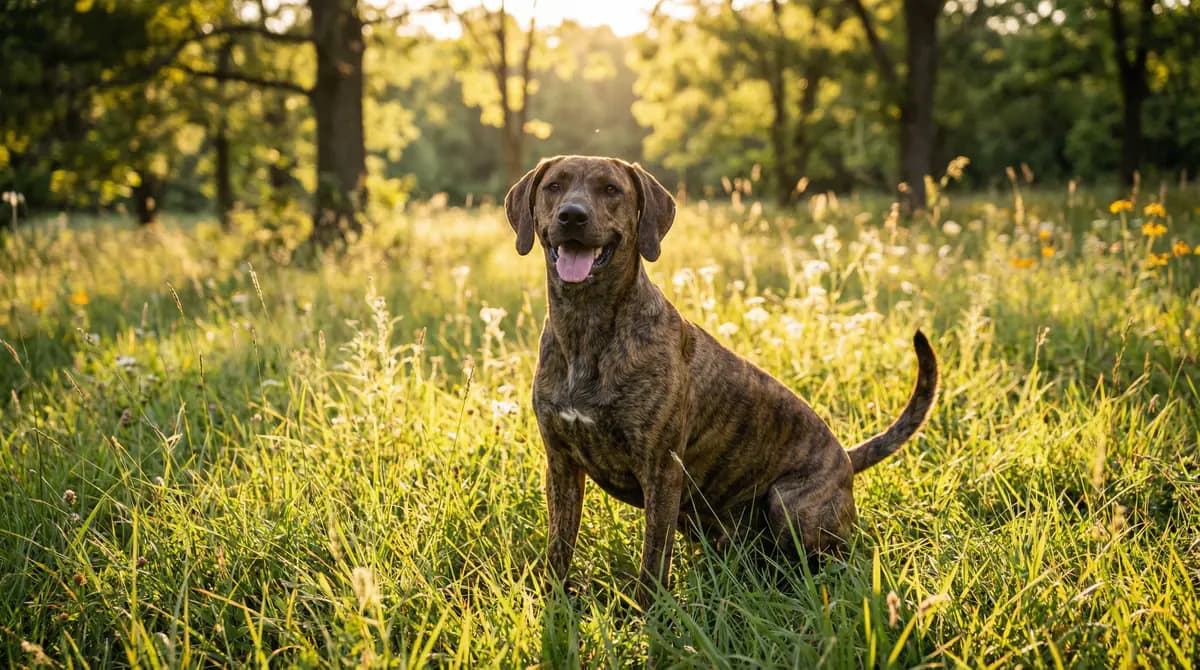
Plotts are midsize to large brindle athletes; muscle shifts the scale while your veterinarian confirms condition. Read the projection as a trend across weeks, not one post-hike weigh-in.
They often look lean; your vet separates healthy athlete from underfed.
When growth eases, treat drift shows if neighborhood walks shrink but bowl stays full.
Drop ears trap moisture after wet work; learn normal smell versus urgent with your vet.
They train when motivated; measured meals keep nose drive from becoming roundness.
Teen listening dips are normal; shorten sessions, raise pay rate, end on wins.
Un chiot, ce n’est pas qu’une phase : c’est une pile d’étapes différentes. Servez-vous de cela comme fil conducteur, pas comme loi absolue.
Routine, gentle handling, calm exposure.
Leash skills before strength wins.
Endurance build + voice awareness.
Stamina matures.
Nous associons quelques grandes familles utiles au quotidien (sommeil, marche, repas…) avec les réglages de gabarit et de croissance : des idées souvent très bien notées, cohérentes avec vos paramètres actuels.
Repas, sorties, éducation, maison, prévention — rédigé pour celles et ceux qui viennent de regarder la courbe de poids.
Your veterinarian picks puppy nutrition for steady growth on a deep-chested frame.
Measured meals make hound training honest.
Transition foods over ~7 days unless your vet directs otherwise.
Sniff walks and age-appropriate mileage beat empty laps; Plotts need nose work.
End before overtired mouthiness or frantic pulling.
Heat planning; pause before distress panting.
Patience and high-value rewards; nagging teaches selective hearing.
Socialization is pairing and distance; calm novelty beats chaotic stacking.
Teach calm default behaviors between scent adventures.
Secure fencing and latches; scenthounds follow trails off property.
Neighbor voice plan: predict when barking spikes and have outlets ready.
Hips and ears are common conversation topics; your vet personalizes screening and ear protocols.
Parasite control should match your region and brush exposure.
Dental tolerance training while young pays off for life.
En cas de doute, appelez surtout avec un chiot. Cette liste n’est ni exhaustive ni un guide d’urgence ; ce sont des rappels que beaucoup de cliniques veulent entendre tôt.
Information générale seulement : pas un avis médical ni un substitut à l’examen et au plan d’un vétérinaire diplômé. Les estimations et astuces ne diagnostiquent pas ; en cas de souci sanitaire, contactez votre clinique.
Bold, smart, and loyal
Hound
Moyen
12-14 years
15 mois
40-60 lb
20-25 po de haut
40-60 lb
20-23 po de haut
Plott Hounds were developed in the Appalachian Mountains from German Hanover-type hounds brought by Johannes Plott, refined for bear and boar hunting and cold-trail work.
They are brindle athletes with serious drive; pet life still needs real exercise.
Voice and independence are breed traits; neighbors care about your plan.
Le simulateur s’appuie sur l’âge et le poids du moment pour estimer le gabarit adulte. Comme la croissance est très rapide au début puis ralentit, l’ajustement tient compte de l’étape où se trouve votre Plott Hound.
Un Plott Hound est en général proche de sa taille adulte vers 15 mois. Plus le chiot vieillit et plus une part de la croissance est déjà faite, plus l’estimation se stabilise.
La plupart des adultes Plott Hound se situent habituellement entre 40 et 60 lb. Vous pouvez estimer très jeune, mais la fiabilité grimpe souvent après ~12 semaines.
Faites découvrir PetCareCalc à d’autres propriétaires ou gardez le lien pour plus tard.
À essayer aussi : Âge du chien (années chien et humaines) · Quiz des races
Ajoutez gratuitement notre simulateur à votre site.
Toujours en train de défiler ?
Quelques clics rapides, un résultat immédiat et un lien à envoyer dans le groupe — gratuit, sans compte.
C’est partiCroissance estimée pour votre Plott Hound