Graphique personnalisé
Indiquez âge et poids pour voir la courbe de votre chien.
Jusqu’où ira mon Brittany ? Poids adulte estimé et suivi de croissance.
Nous associons quelques grandes familles utiles au quotidien (sommeil, marche, repas…) avec les réglages de gabarit et de croissance : des idées souvent très bien notées, cohérentes avec vos paramètres actuels.
Grandes cages
Couchages douillets
Harnais prêts sortie
Gamelle interactive
Brittany puppies are compact pointing dogs with endless go. Your growth chart belongs next to lean condition, ear care, and training that teaches an off switch, not just more speed.
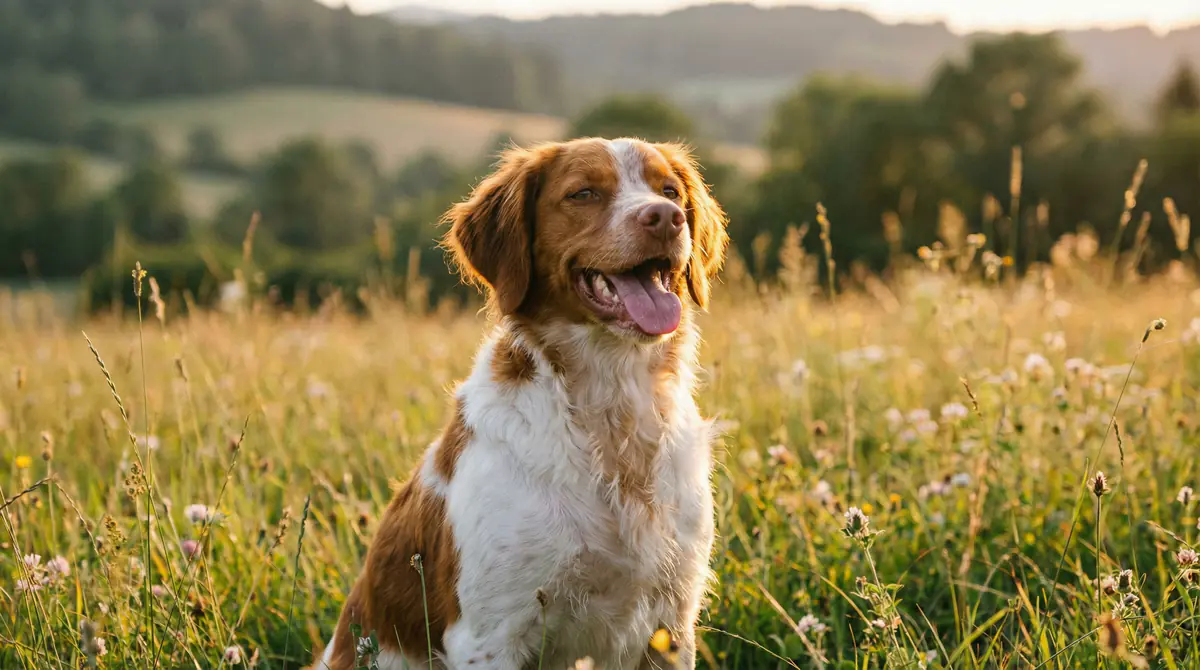
Brittanys are usually lean athletes; “light on the chart” can be healthy if ribs are fine and your vet agrees.
Weekly gains wobble; monthly trend beats one odd weigh in.
Sudden weight climb often means treat drift after growth slows.
Drop ears trap moisture; learn normal smell and appearance.
Limping after hard play deserves vet input, not hero mode.
Teen listening dips are normal; lower criteria and raise rewards.
Un chiot, ce n’est pas qu’une phase : c’est une pile d’étapes différentes. Servez-vous de cela comme fil conducteur, pas comme loi absolue.
Routine, potty, gentle exposure, soft mouth games.
Leash skills before pulls win.
Channel drive; protect joints.
Build endurance gradually.
Nous associons quelques grandes familles utiles au quotidien (sommeil, marche, repas…) avec les réglages de gabarit et de croissance : des idées souvent très bien notées, cohérentes avec vos paramètres actuels.
Repas, sorties, éducation, maison, prévention — rédigé pour celles et ceux qui viennent de regarder la courbe de poids.
Quality growth diet; your vet picks category.
Measured meals; sporting dogs train on food.
Slow transitions between foods.
Free play, swimming when safe, varied terrain.
End before overtired mouthiness.
Heat and humidity planning.
Teach calm: mat, crate chill.
Socialization is pairing and distance, not chaos.
Retrieve rules prevent keep away.
Rotate toys; bored Brittanys remodel shoes.
Towel by the door for wet days.
Vaccines and parasites per your vet.
Ear plan if infections recur.
Discuss inherited topics your breeder screened.
En cas de doute, appelez surtout avec un chiot. Cette liste n’est ni exhaustive ni un guide d’urgence ; ce sont des rappels que beaucoup de cliniques veulent entendre tôt.
Information générale seulement : pas un avis médical ni un substitut à l’examen et au plan d’un vétérinaire diplômé. Les estimations et astuces ne diagnostiquent pas ; en cas de souci sanitaire, contactez votre clinique.
Bright, fun-loving, and upbeat
Sporting
Moyen
12-14 years
15 mois
30-40 lb
17.5-20.5 po de haut
30-40 lb
17.5-20.5 po de haut
The Brittany developed in the Brittany province of France as a close working pointing dog for foot hunters who needed a versatile gundog in brush and field.
Once called spaniels despite working more like pointers, the breed was refined for range control, bird sense, and biddable enthusiasm.
American and French styles diverged somewhat in range and build, but the through line is the same: athletic, people oriented, and happiest with a job. Pet Brittanys still carry that wiring.
Le simulateur s’appuie sur l’âge et le poids du moment pour estimer le gabarit adulte. Comme la croissance est très rapide au début puis ralentit, l’ajustement tient compte de l’étape où se trouve votre Brittany.
Un Brittany est en général proche de sa taille adulte vers 15 mois. Plus le chiot vieillit et plus une part de la croissance est déjà faite, plus l’estimation se stabilise.
La plupart des adultes Brittany se situent habituellement entre 30 et 40 lb. Vous pouvez estimer très jeune, mais la fiabilité grimpe souvent après ~12 semaines.
Réponses directes sur la taille, la croissance, l’alimentation et comment utiliser ce simulateur avec votre véto.
Adult Brittanys are medium sporting dogs—often quoted around 30–40 lb—with American and French styles sometimes differing in build and range. They are usually lean athletes; “light on the chart” can still pair with visible muscle, easy ribs, and busy energy. Compare to parents or littermates when you can.
Many approach much of their frame by roughly 12–15 months, but conditioning keeps evolving. Weekly weigh-ins can wobble—look at monthly trends. If weight jumps after growth slows, training treats and portion creep are common causes; trim extras before you bump meals.
Drop ears hold moisture after swimming or in humidity, so a quick dry of the outer flap and a familiar sniff-after-swim routine helps you notice changes early. If ears stay wet and dirty, adjust swim frequency or rinse-and-dry habits before smell becomes a constant.
They are pointing dogs with plenty of go: free play, swimming when safe, sniffing, and varied terrain usually beat mindless leash mileage. Avoid repetitive high jumps on hard floors while young—save big air for when your dog looks coordinated and mature—and end sessions before overtired mouthiness. Plan for heat and humidity.
Brittanys learn fast for food, so pre-portion training rewards from breakfast or use low-calorie reps for skills they already know. Log seminar weekends and hunt training days—those calories count. After big field or swim days, weigh a few days later to see whether portions need a tiny trim or just honest treat accounting.
Faites découvrir PetCareCalc à d’autres propriétaires ou gardez le lien pour plus tard.
À essayer aussi : Âge du chien (années chien et humaines) · Quiz des races
Ajoutez gratuitement notre simulateur à votre site.
Toujours en train de défiler ?
Quelques clics rapides, un résultat immédiat et un lien à envoyer dans le groupe — gratuit, sans compte.
C’est partiCroissance estimée pour votre Brittany