Graphique personnalisé
Indiquez âge et poids pour voir la courbe de votre chien.
Jusqu’où ira mon Bulldog ? Poids adulte estimé et suivi de croissance.
Nous associons quelques grandes familles utiles au quotidien (sommeil, marche, repas…) avec les réglages de gabarit et de croissance : des idées souvent très bien notées, cohérentes avec vos paramètres actuels.
Grandes cages
Couchages douillets
Harnais prêts sortie
Gamelle interactive
Bulldogs grow heavy on bone, this ties your chart to joint protection, heat safety, and the stubborn but sweet training style that actually works.
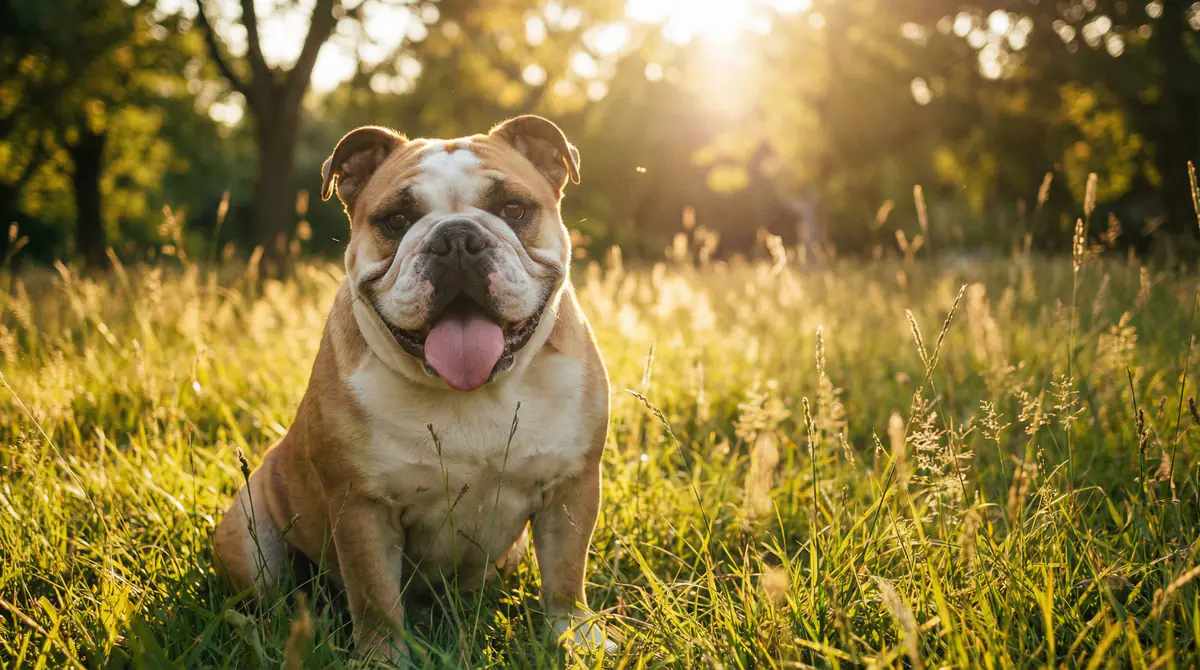
Bulldogs show weight gain quickly; “a little extra” loads joints that already carry a lot of structure.
They often widen after height slows, your curve may flatten then creep; that is when food discipline matters most.
If your puppy seems round from every angle, assume treats and measurement drift until proven otherwise.
If you are unsure about body condition, ask your vet to demonstrate a rib check rather than guessing from appearance alone.
Exercise intolerance may be heat, airway, or weight, sort with your vet.
Flat faces mean you watch gum color and noise level on walks.
Un chiot, ce n’est pas qu’une phase : c’est une pile d’étapes différentes. Servez-vous de cela comme fil conducteur, pas comme loi absolue.
Heat, sleep, potty, calm socialization.
Train with patience, stubborn is normal.
Where many Bulldogs get wider.
Keep lean, keep cool, keep consistent.
Nous associons quelques grandes familles utiles au quotidien (sommeil, marche, repas…) avec les réglages de gabarit et de croissance : des idées souvent très bien notées, cohérentes avec vos paramètres actuels.
Repas, sorties, éducation, maison, prévention — rédigé pour celles et ceux qui viennent de regarder la courbe de poids.
Measured meals; slow transitions between diets.
Gas and stool changes mean slow switches and vet if persistent.
Bulldogs swallow air easily; bowl height, pace, and meal size are worth discussing with your vet if gulping or reflux show up.
Multiple short walks often beat one long slog.
Indoor enrichment on hot days.
End sessions before your pup is glassy eyed or noisy breathing ramps; recovery should be quick once they rest.
Reward generously; repetition without anger.
Clear rules beat nagging.
Short wins: flat faced pups tire faster; split training into many tiny reps across the day.
Cool rest zones; brachy breeds overheat indoors too without airflow.
White noise or a quiet room can help puppies settle in busy homes without constant startle barking.
Skin fold care per vet; allergies are common.
Dental crowding means early planning with your veterinarian.
Discuss airway and eye baseline with your vet so you know your pup’s normal noise and gum color on a good day.
En cas de doute, appelez surtout avec un chiot. Cette liste n’est ni exhaustive ni un guide d’urgence ; ce sont des rappels que beaucoup de cliniques veulent entendre tôt.
Information générale seulement : pas un avis médical ni un substitut à l’examen et au plan d’un vétérinaire diplômé. Les estimations et astuces ne diagnostiquent pas ; en cas de souci sanitaire, contactez votre clinique.
Calm, courageous, and friendly
Non-Sporting
Moyen
8-10 years
12 mois
Prone to flatulence and weight gain. High-quality fiber and restricted calories are key.
English Bulldog
50-50 lb
14-15 po de haut
40-40 lb
14-15 po de haut
Bulldogs grow 'out' more than they grow 'up' after 8 months. Their heavy bone structure requires careful weight management to avoid joint strain.
The old English Bulldog was tied to bull-baiting, a brutal sport banned in the UK in 1835. Without that job, breeders redirected the type toward a calmer companion animal, reshaping head, body, and temperament across decades.
Victorian breeders selected for a shorter face, heavier front, and loose skin until the modern Bulldog silhouette emerged. The dog in old paintings does not match the dog on your couch; that is intentional human selection, not accident.
Today’s Bulldog is primarily a companion. The historical pivot from combat sport to living room explains both their famously chill attitude and the structural tradeoffs that require careful heat management, weight control, and vet partnership.
Le simulateur s’appuie sur l’âge et le poids du moment pour estimer le gabarit adulte. Comme la croissance est très rapide au début puis ralentit, l’ajustement tient compte de l’étape où se trouve votre Bulldog.
Un Bulldog est en général proche de sa taille adulte vers 12 mois. Plus le chiot vieillit et plus une part de la croissance est déjà faite, plus l’estimation se stabilise.
La plupart des adultes Bulldog se situent habituellement entre 40 et 50 lb. Vous pouvez estimer très jeune, mais la fiabilité grimpe souvent après ~12 semaines.
Réponses directes sur la taille, la croissance, l’alimentation et comment utiliser ce simulateur avec votre véto.
Adult Bulldogs are often quoted around 40–50 lb overall, with males commonly near the top of the band (about 50 lb) and females often lighter (about 40 lb). They are heavy on bone and compact in height, so small shifts on the scale can mean a lot for how they move and rest. Use the calculator to track gentle trends and compare your dog to its own photos month to month—not a meme dog on social media.
Many Bulldogs do a lot of their “up” growth earlier, then keep filling out and broadening while height slows—your breed notes describe growing “out” more than “up” after roughly eight months. That is when measured meals and honest treat accounting matter most: extra weight shows up fast on a stocky frame. Monthly standing photos from above help you spot a disappearing waist before the scale jumps.
Think short, cool, and repeatable: several brief walks or sniff sessions usually beat one long slog, especially in heat. Stocky, short-muzzled pups often tire faster in warm weather; use a well-fitted harness to reduce throat pressure and end sessions while your dog is still eager. Swimming and jumping off heights are skills to introduce gradually—not automatic weekend sports for every puppy.
They are known for gas and easy weight gain; steady fiber from a complete diet and honest calorie math beat random supplement stacks. Measured food (a kitchen scale beats guessing scoops), a treat budget, and slow diet transitions help. If your pup gulps meals, try smaller portions more often or a slow feeder before you change brands.
Weigh on the same schedule (often every few weeks while young), same scale, and ideally before breakfast so meals do not skew the number. Pair the curve with rib checks; Bulldogs can look “fine” from some angles while carrying extra pounds. If the projection and the mirror disagree for several weeks, trim treats and re-measure portions before you chase size with extra calories.
Faites découvrir PetCareCalc à d’autres propriétaires ou gardez le lien pour plus tard.
À essayer aussi : Âge du chien (années chien et humaines) · Quiz des races
Ajoutez gratuitement notre simulateur à votre site.
Toujours en train de défiler ?
Quelques clics rapides, un résultat immédiat et un lien à envoyer dans le groupe — gratuit, sans compte.
C’est partiCroissance estimée pour votre Bulldog