Graphique personnalisé
Indiquez âge et poids pour voir la courbe de votre chien.
Jusqu’où ira mon Labrador Retriever ? Poids adulte estimé et suivi de croissance.
Nous associons quelques grandes familles utiles au quotidien (sommeil, marche, repas…) avec les réglages de gabarit et de croissance : des idées souvent très bien notées, cohérentes avec vos paramètres actuels.
Grandes cages
Couchages douillets
Harnais prêts sortie
Gamelle interactive
You came for a weight projection, here is how to use it, what to do this week, and how to get through the first year without second guessing every pound.
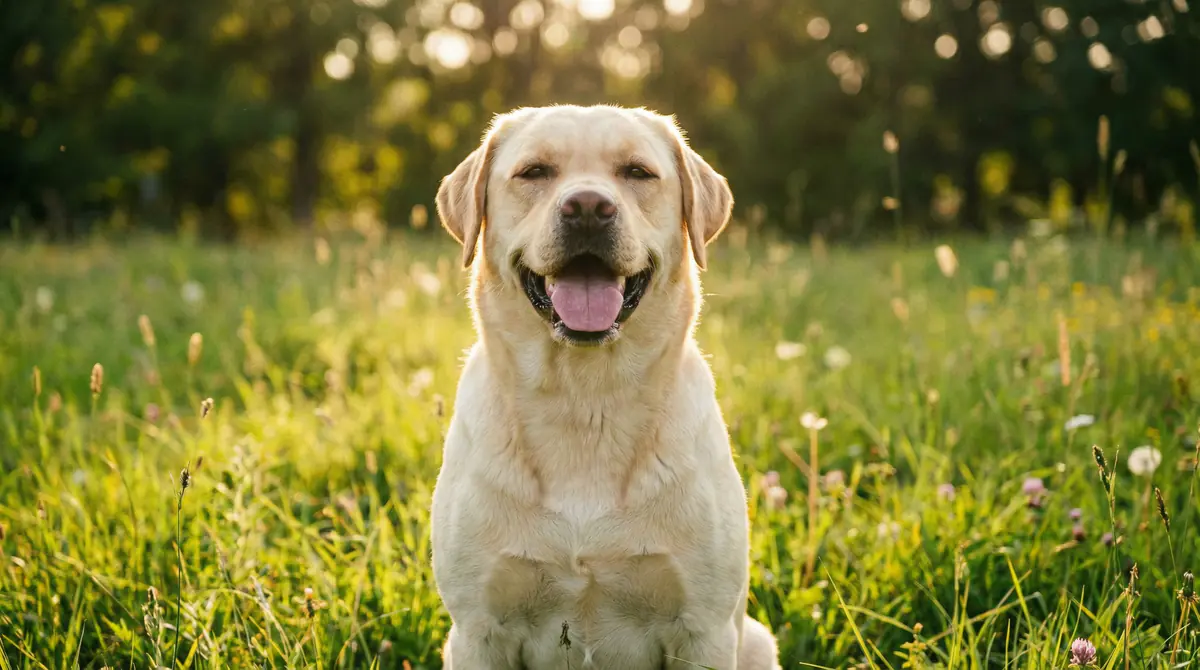
Your chart is a projection based on typical Labrador growth, not a diagnosis. Sex, genetics (English vs American lines), and whether your pup is pet or field bred can shift adult size by a noticeable margin.
If your puppy is around 14 weeks and near the middle of the breed range, that usually means you are in a normal window, but the next step is not obsessively rerunning numbers. It is pairing the estimate with body condition, appetite, and your vet’s exam.
Use the calculator as a compass: same scale, same time of day, log every 2 to 3 weeks while young. A smooth curve matters more than any single weigh in matching the midpoint.
Labs often look “skinny” during leg lengthening phases and then fill out through the second year. Body condition is individual; your vet can show you how to assess ribs, waist, and tuck at home without replacing an in-clinic exam.
Labs are famous for acting hungry on an empty stomach and a full one. “But he acts starving” is not a reliable feeding guide, measured meals and body condition are.
Sudden flattening or dropping off a growth curve, or racing far ahead while looking pudgy, is worth a conversation with your vet. Gradual drift is common; cliff edges less so.
Un chiot, ce n’est pas qu’une phase : c’est une pile d’étapes différentes. Servez-vous de cela comme fil conducteur, pas comme loi absolue.
Survival mode for you, routine, sleep, potty, and gentle exposure.
Energy spikes, teething, and big curiosity.
Still growing, protect joints while burning steam.
Many Labs look lanky, then broaden, patience with conditioning.
Nous associons quelques grandes familles utiles au quotidien (sommeil, marche, repas…) avec les réglages de gabarit et de croissance : des idées souvent très bien notées, cohérentes avec vos paramètres actuels.
Repas, sorties, éducation, maison, prévention — rédigé pour celles et ceux qui viennent de regarder la courbe de poids.
Choose a diet appropriate for large breed puppies if your vet recommends it, growth should be steady, not racing.
Split meals into at least three feedings young, then taper to two as your vet advises. Labs do better on structure than grazing.
If you use kibble, measure with a scale, not a scoop eyeball. Calories vary wildly by brand and “heaping.”
Think “age appropriate volume.” Puppies need movement, but they are not miniature adult runners.
Off leash romps in safe spaces beat leash dragging miles for growing joints.
Swimming is often ideal once safe, low impact, high satisfaction for many Labs.
Socialization is “novelty + positive association,” not flooding. If your pup is worried, increase distance and decrease intensity.
Teach “drop it” and “leave it” early, Labs explore the world with their mouths.
Retrieve games are built in motivation; use two toy swaps to keep possession fun and trainable.
Predictable sleep/food/potty beats “winging it” for the first month.
Management prevents rehearsal: gates, crates, leashes indoors when you cannot supervise.
Parasite control, vaccines, and microchip are baseline, your vet sets the schedule for your region.
Dental care starts with tolerance; later brushing is easier if mouths are handled young.
Discuss hip and elbow awareness and exercise induced collapse if your line is known for it, your vet can personalize watch items.
En cas de doute, appelez surtout avec un chiot. Cette liste n’est ni exhaustive ni un guide d’urgence ; ce sont des rappels que beaucoup de cliniques veulent entendre tôt.
Information générale seulement : pas un avis médical ni un substitut à l’examen et au plan d’un vétérinaire diplômé. Les estimations et astuces ne diagnostiquent pas ; en cas de souci sanitaire, contactez votre clinique.
Friendly, active, and outgoing
Sporting
Grand
10-12 years
18 mois
Labradors are notorious for overeating. Since they are prone to obesity, precise weight monitoring is crucial.
Lab, Black Lab, Yellow Lab, Chocolate Lab, Fox Red Lab, Silver Lab, Field Labrador
65-80 lb
22.5-24.5 po de haut
55-70 lb
21.5-23.5 po de haut
Labs often have a 'teenage' phase where they look lanky before filling out their chest and muscle mass around 18 months.
The Lab’s ancestors were sturdy retrieving dogs used in Newfoundland by fishermen: athletic enough to work in cold water, willing to bring nets and lines, and biddable enough to partner with people on small boats.
Those dogs caught the eye of British sportsmen in the 1800s. Breeders in the United Kingdom crossed and refined them into the retrieving specialist we recognize today, selecting for soft mouths, marking ability, and the steady temperament that made Labs world famous as gundogs.
Over generations the breed split into overlapping types people still argue about: broader “English” show lines, leaner “American” field lines, and everything in between. Same breed name, different jobs and silhouettes, which is why your puppy’s adult frame may not match a random Lab on the internet.
Le simulateur s’appuie sur l’âge et le poids du moment pour estimer le gabarit adulte. Comme la croissance est très rapide au début puis ralentit, l’ajustement tient compte de l’étape où se trouve votre Labrador Retriever.
Un Labrador Retriever est en général proche de sa taille adulte vers 18 mois. Plus le chiot vieillit et plus une part de la croissance est déjà faite, plus l’estimation se stabilise.
La plupart des adultes Labrador Retriever se situent habituellement entre 55 et 80 lb. Vous pouvez estimer très jeune, mais la fiabilité grimpe souvent après ~12 semaines.
Réponses directes sur la taille, la croissance, l’alimentation et comment utiliser ce simulateur avec votre véto.
Most adult Labs fall in roughly a 55–80 lb range, with males commonly toward the upper band (about 65–80 lb) and females often lighter (about 55–70 lb). The same breed name still covers stockier “English” show lines and leaner “American” field lines, so two healthy puppies can land at different ends of the range. Use the calculator as a trend tool together with simple at-home checks (waist from above, ribs easy to feel)—not a single target number.
Labs often go through a leggy “teenager” phase: they stretch up before they fill out through the chest and shoulders. That lanky look can be normal while they are still maturing. What matters is steady weight gain over weeks, good energy, and a visible waist when you look from above. If the trend line on your log looks off for several weeks, double-check portions and treats before blaming the chart.
Height and a lot of frame often come together by roughly 12–18 months, but many Labs keep broadening and adding muscle for a while after that—your breed profile notes filling out around the 18‑month window is common. Growth should look smooth on your weight log; uneven single weeks are normal, but month-long direction should make sense.
Weigh on the same scale, same time of day (often before breakfast), and log every few weeks while your pup is young—trends beat one-off weigh-ins. Estimates are usually more useful after about 12 weeks, when early nutrition noise fades. Pair the projection with measured meals and body condition; Labs are famous for acting hungry even when they are not underfed, so “begging” is not a reliable feeding guide.
Yes. Labradors are well known for overeating and easy weight gain. Precise portions (a kitchen scale beats eyeballing scoops) and counting training treats as part of daily food keep the curve honest. If your puppy is racing up the curve while the waist disappears in photos, trim extras before you bump meal size.
Faites découvrir PetCareCalc à d’autres propriétaires ou gardez le lien pour plus tard.
À essayer aussi : Âge du chien (années chien et humaines) · Quiz des races
Ajoutez gratuitement notre simulateur à votre site.
Toujours en train de défiler ?
Quelques clics rapides, un résultat immédiat et un lien à envoyer dans le groupe — gratuit, sans compte.
C’est partiCroissance estimée pour votre Labrador Retriever