Graphique personnalisé
Indiquez âge et poids pour voir la courbe de votre chien.
Jusqu’où ira mon Golden Retriever ? Poids adulte estimé et suivi de croissance.
Nous associons quelques grandes familles utiles au quotidien (sommeil, marche, repas…) avec les réglages de gabarit et de croissance : des idées souvent très bien notées, cohérentes avec vos paramètres actuels.
Grandes cages
Couchages douillets
Harnais prêts sortie
Gamelle interactive
Goldens melt hearts fast, this guide connects your growth chart to body condition, alone time skills, and the retrieving instincts that need healthy outlets.
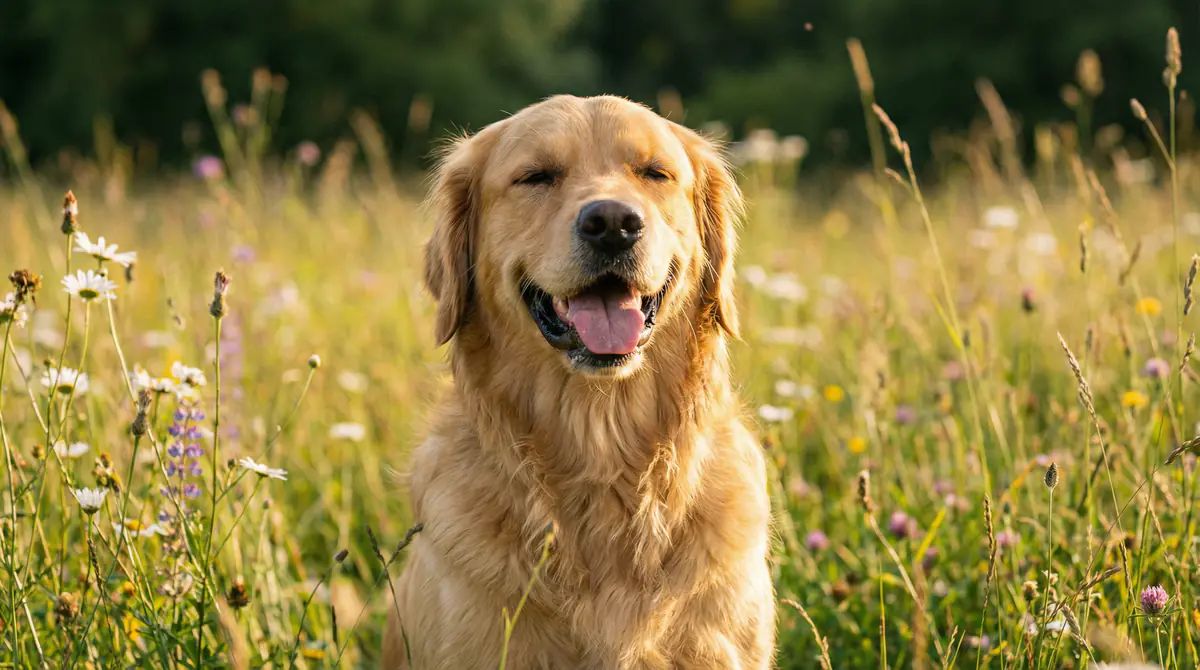
English type Goldens can run stockier; field bred lines often look leaner at the same age. Your calculator output should be read alongside build, not instead of it.
If you are staring at “14 weeks, 10 lb” wondering if it is right: for many large breeds, weekly gains can look uneven, look at 3 to 4 week direction, not one day.
Goldens are prone to carrying extra weight “nicely.” That makes the scale AND waist photos important.
Many people use waist and tuck as informal checks at home. If you are unsure whether your pup is over or under ideal condition, ask your veterinarian.
Coat fluff hides fat, hands on rib checks monthly.
Limping after play or reluctance to climb stairs young should be evaluated, do not “walk it off.”
Un chiot, ce n’est pas qu’une phase : c’est une pile d’étapes différentes. Servez-vous de cela comme fil conducteur, pas comme loi absolue.
Gentleness, routine, and early confidence.
Skills + manners before adolescence.
Channel energy; protect joints.
Conditioning and lifelong habits.
Nous associons quelques grandes familles utiles au quotidien (sommeil, marche, repas…) avec les réglages de gabarit et de croissance : des idées souvent très bien notées, cohérentes avec vos paramètres actuels.
Repas, sorties, éducation, maison, prévention — rédigé pour celles et ceux qui viennent de regarder la courbe de poids.
Structured meals help you know appetite changes quickly.
Use a kitchen scale for kibble when possible.
If using toppers, account for them in daily calories.
Off leash romps in safe areas beat leash yanking “exhaustion.”
Swimming can be joint friendly and joyful.
End sessions before your pup becomes a shark.
Harsh corrections often backfire; clarity and consistency win.
Teach calm as a skill, not just commands.
Retrieve instincts need rules so stealing and guarding do not start.
Rotate rest and activity; overtired Goldens get mouthy.
Management prevents rehearsal, gates, crates, leashes.
Parasites, vaccines, and dental baseline per your vet.
Heart health conversations may be relevant depending on lines, ask your breeder and vet.
Keep a weight notebook or phone note with dates.
En cas de doute, appelez surtout avec un chiot. Cette liste n’est ni exhaustive ni un guide d’urgence ; ce sont des rappels que beaucoup de cliniques veulent entendre tôt.
Information générale seulement : pas un avis médical ni un substitut à l’examen et au plan d’un vétérinaire diplômé. Les estimations et astuces ne diagnostiquent pas ; en cas de souci sanitaire, contactez votre clinique.
Friendly, intelligent, and devoted
Sporting
Grand
10-12 years
17 mois
Goldens love food. Monitoring their 'waistline' is just as important as the scale to prevent joint strain.
Golden
65-75 lb
23-24 po de haut
55-65 lb
21.5-22.5 po de haut
English Cream varieties are often slightly stockier, while field-bred Goldens may be leaner and more athletic.
The Golden was developed in Scotland in the late 1800s by Dudley Marjoribanks, later Lord Tweedmouth, on his Guisachan estate. He wanted a retriever suited to Scottish weather and terrain: a dog that could work wet ground, handle cold water, and deliver game gently to hand.
His breeding records show careful crosses of existing retrievers and other sporting breeds to lock in coat, temperament, and working style. The goal was a capable gundog first; the glamorous coat color was a side effect that later stole the spotlight.
Goldens spread from British shooting culture to American fields and living rooms. “English cream” versus American style debates are mostly about different breeding emphases and silhouettes, not different origins, which is worth remembering when someone insists only one look is “correct.”
Le simulateur s’appuie sur l’âge et le poids du moment pour estimer le gabarit adulte. Comme la croissance est très rapide au début puis ralentit, l’ajustement tient compte de l’étape où se trouve votre Golden Retriever.
Un Golden Retriever est en général proche de sa taille adulte vers 17 mois. Plus le chiot vieillit et plus une part de la croissance est déjà faite, plus l’estimation se stabilise.
La plupart des adultes Golden Retriever se situent habituellement entre 55 et 75 lb. Vous pouvez estimer très jeune, mais la fiabilité grimpe souvent après ~12 semaines.
Réponses directes sur la taille, la croissance, l’alimentation et comment utiliser ce simulateur avec votre véto.
Many adult Goldens land near a 55–75 lb band, with males often toward roughly 65–75 lb and females toward roughly 55–65 lb. “English cream” types can run stockier; field-bred lines are often leaner at the same age. The calculator reflects breed-norm growth; your puppy’s parents and littermates still add useful context when you have them.
Coat can hide extra pounds, so combine the scale with hands-on rib checks and standing photos from above to watch waist and tuck. Goldens are prone to carrying weight “nicely,” which makes extra padding easy to miss. When in doubt, trust several weeks of trend and photos more than a single weigh-in.
A lot of height and frame is in place by roughly 12–18 months for many dogs, but conditioning and muscle can keep evolving after that. Uneven weekly gains are common in large puppies; look at direction over several weeks. If appetite or energy shifts for many days in a row, log it next to your weights so you can see whether food or activity changed first.
Enthusiasm for food is a breed hallmark and not proof they need more. Measured meals, accounting for training treats and toppers, and small slow adjustments beat feeding to silence begging. Keeping a visible waist through growth usually lines up better with an easy-moving adult than letting the scale creep up “because they asked.”
Think age-appropriate play: sniffing, free romps in safe spaces, and calm water introduction when your pup is confident often beat long repetitive jogging on hard surfaces while they are young. Heat and humidity matter—shift walks to cooler times, offer water, and end sessions before your pup is overtired. If they look sore after a big day, give an easy day and lighter play before ramping back up.
Faites découvrir PetCareCalc à d’autres propriétaires ou gardez le lien pour plus tard.
À essayer aussi : Âge du chien (années chien et humaines) · Quiz des races
Ajoutez gratuitement notre simulateur à votre site.
Toujours en train de défiler ?
Quelques clics rapides, un résultat immédiat et un lien à envoyer dans le groupe — gratuit, sans compte.
C’est partiCroissance estimée pour votre Golden Retriever