Graphique personnalisé
Indiquez âge et poids pour voir la courbe de votre chien.
Jusqu’où ira mon Rottweiler ? Poids adulte estimé et suivi de croissance.
Nous associons quelques grandes familles utiles au quotidien (sommeil, marche, repas…) avec les réglages de gabarit et de croissance : des idées souvent très bien notées, cohérentes avec vos paramètres actuels.
Grandes cages
Couchages douillets
Harnais prêts sortie
Gamelle interactive
Rotties mature slowly and feel everything deeply, use your projection alongside lean growth, careful exercise, and training that builds confidence without fear.
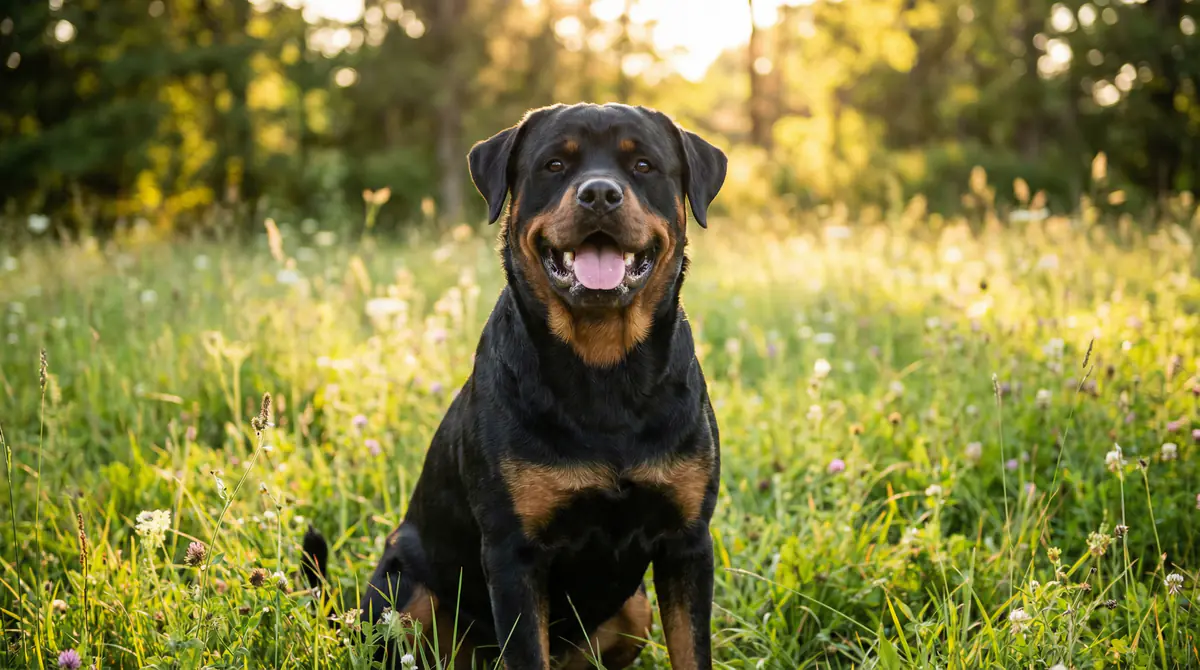
Adult breadth may not arrive until 2 to 3 years; a “small” teen can still land large, trends beat snapshots.
Do not push calories to accelerate size; excess weight on fast growth is hard on joints.
If your pup is ahead of the curve visually, check treats, measurement, and neuter timing effects with your vet.
Heavy coat can hide weight changes; your vet can help you learn a safe way to monitor condition at home.
Limping or unusual fatigue after play is worth discussing with your veterinarian.
Growth spurts can look awkward; pain looks different.
Un chiot, ce n’est pas qu’une phase : c’est une pile d’étapes différentes. Servez-vous de cela comme fil conducteur, pas comme loi absolue.
Gentle handling, routine, safe socialization.
Skills + impulse control.
Consistency is everything.
Strength arrives late, patience.
Nous associons quelques grandes familles utiles au quotidien (sommeil, marche, repas…) avec les réglages de gabarit et de croissance : des idées souvent très bien notées, cohérentes avec vos paramètres actuels.
Repas, sorties, éducation, maison, prévention — rédigé pour celles et ceux qui viennent de regarder la courbe de poids.
Large breed puppy nutrition if your vet recommends it.
Measured meals; slow switches.
Do not chase “impressive size” with extra calories; lean growth is the goal your vet can help you judge.
Hills, varied walking, tug with rules, swimming when safe.
Avoid forced running programs on pavement for babies.
Prefer free play and sniffing over repetitive jumping or stairs while growth plates are open.
Teach neutrality at windows and fences.
Reward quiet; do not accidentally reward alarm barking with yelling.
Harsh corrections often backfire; clarity, consistency, and calm leadership scale better as the dog grows.
Predictable routines reduce anxiety.
Management beats nagging: gates, crates, and leashes prevent rehearsal of jumping and door charging.
Weight logs help vet visits.
Discuss screening timelines appropriate to your region/breeder.
A short home video of intermittent limping helps your vet see what you see.
En cas de doute, appelez surtout avec un chiot. Cette liste n’est ni exhaustive ni un guide d’urgence ; ce sont des rappels que beaucoup de cliniques veulent entendre tôt.
Information générale seulement : pas un avis médical ni un substitut à l’examen et au plan d’un vétérinaire diplômé. Les estimations et astuces ne diagnostiquent pas ; en cas de souci sanitaire, contactez votre clinique.
Loyal, loving, and confident guardian
Working
Grand
8-10 years
24 mois
Weight management is vital to prevent early-onset joint issues. Avoid high-calorie 'bulking' foods during puppyhood.
Rottie
95-135 lb
24-27 po de haut
80-100 lb
22-25 po de haut
Rottweilers are one of the slowest-growing large breeds. They may not reach their final muscular breadth until 2 or even 3 years of age.
Roman armies moved across Europe with drover dogs that herded and guarded livestock to feed the legions. Those mastiff-type dogs left genetic footprints in German cattle towns, especially around Rottweil, where butchers used robust dogs to drive stock to market and guard money on the return trip.
Industrialization nearly erased the job. The breed dwindled until dedicated fanciers revived it in the late 1800s, documenting type and stabilizing the Rottweiler we recognize: heavy bone, black and tan markings, and a calm nerve when well bred.
Modern Rottweilers serve as family guardians, sport dogs, and working K9s worldwide. Their history as all purpose farm protectors explains both their loyalty and why early socialization and fair training matter so much while they are still growing.
Le simulateur s’appuie sur l’âge et le poids du moment pour estimer le gabarit adulte. Comme la croissance est très rapide au début puis ralentit, l’ajustement tient compte de l’étape où se trouve votre Rottweiler.
Un Rottweiler est en général proche de sa taille adulte vers 24 mois. Plus le chiot vieillit et plus une part de la croissance est déjà faite, plus l’estimation se stabilise.
La plupart des adultes Rottweiler se situent habituellement entre 80 et 135 lb. Vous pouvez estimer très jeune, mais la fiabilité grimpe souvent après ~12 semaines.
Réponses directes sur la taille, la croissance, l’alimentation et comment utiliser ce simulateur avec votre véto.
Rottweilers are a large, heavy-boned breed: adults are often quoted around 80–135 lb overall, with males frequently toward roughly 95–135 lb and females toward roughly 80–100 lb. Two healthy lines can land differently. Treat the calculator as a trend tool—compare your dog to its own past weights and photos, not to unrelated dogs online.
They are among the slower-maturing large breeds: final muscular “breadth” can still be developing toward roughly two to three years of age. A teenage Rottie that looks “small” can still finish large, which is why steady growth matters more than forcing size with extra food. As height growth slows, trim meal bumps and lean on your weight log so adult condition stays honest.
No—lean, steady growth is the usual goal for an athletic adult. Avoid high-calorie “bulking” shortcuts. Measured meals, appropriate large-breed puppy nutrition, and honest accounting for training treats keep the curve smooth instead of spiky. If your pup looks heavy while young, trim extras early while you still have a clear waist in photos.
Favor varied walking, hills, controlled play, sniffing, and calm water play as confidence grows—rather than repetitive jogging on pavement or endless stairs while your pup is still gangly. Dark coats soak up sun; carry water, pick cooler times, and ease off if your dog looks sore the next day. Build harder exercise gradually as coordination catches up.
It reflects typical breed timing against the age and weight you enter, but individuals vary with genetics, sex, and neuter timing. Log weights on a schedule—growth questions are easier with dates than with one number from a single day. If limping shows up after hard play, switch to lighter days until your pup moves freely again; keep the log so you can spot patterns.
Faites découvrir PetCareCalc à d’autres propriétaires ou gardez le lien pour plus tard.
À essayer aussi : Âge du chien (années chien et humaines) · Quiz des races
Ajoutez gratuitement notre simulateur à votre site.
Toujours en train de défiler ?
Quelques clics rapides, un résultat immédiat et un lien à envoyer dans le groupe — gratuit, sans compte.
C’est partiCroissance estimée pour votre Rottweiler