Graphique personnalisé
Indiquez âge et poids pour voir la courbe de votre chien.
Jusqu’où ira mon Poodle (Standard) ? Poids adulte estimé et suivi de croissance.
Nous associons quelques grandes familles utiles au quotidien (sommeil, marche, repas…) avec les réglages de gabarit et de croissance : des idées souvent très bien notées, cohérentes avec vos paramètres actuels.
Grandes cages
Couchages douillets
Harnais prêts sortie
Gamelle interactive
Poodle puppies are smart enough to outthink you, this connects your growth projection to mental exercise, grooming tolerance, and large breed joint care.
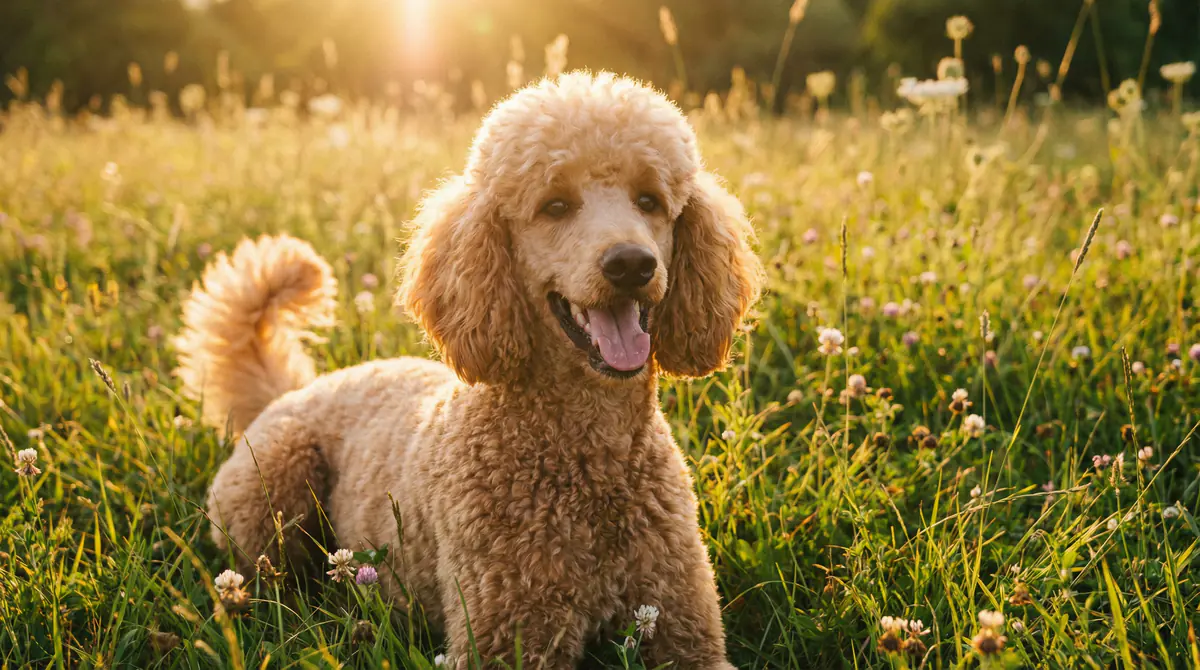
Standards grow upward before they broaden; a tall, narrow teen phase can look “underweight” while still being fine, compare to ribs, muscle, and vet exam.
Pet trims vs show coats change silhouette; do not chase a number that ignores haircut reality.
Energy is high; appetite can be too, measured food keeps growth steady instead of like a roller coaster.
Athletic Standards should feel fit; heavy fat cover hides on fluffy coats, hands on checks matter.
Growth plates matter: repetitive hard jumping while young is a common mistake.
Sudden behavior regression plus lethargy warrants medical rule outs, not only “teen attitude.”
Un chiot, ce n’est pas qu’une phase : c’est une pile d’étapes différentes. Servez-vous de cela comme fil conducteur, pas comme loi absolue.
Sleep, potty, cooperative care, early manners.
Impulse control + leash skills.
Mental work is not optional.
Strength and endurance build gradually.
Nous associons quelques grandes familles utiles au quotidien (sommeil, marche, repas…) avec les réglages de gabarit et de croissance : des idées souvent très bien notées, cohérentes avec vos paramètres actuels.
Repas, sorties, éducation, maison, prévention — rédigé pour celles et ceux qui viennent de regarder la courbe de poids.
High quality diet appropriate for growth; your vet picks the category.
Split meals; measure by scale when possible.
Large breed puppy formulations may be appropriate; growth should be steady, not racing, your vet interprets the label for your dog.
Free play, swimming, and varied terrain beat repetitive pavement pounding.
Mental fatigue reduces “zoomies destruction.”
Alternate hard days with easy sniff days; growing athletes recover better with variety than with repetitive mileage.
Teach calm as heavily as tricks.
Use errorless setups, Poodles learn bad habits just as fast.
Socialization is novelty at comfortable distances; overwhelmed pups need space, not forced greetings.
Rotate toys; frozen stuffed Kongs; snuffle mats.
Brush little and often; five calm minutes beats one weekly battle.
Groomer/vet handling should stay positive, short happy visits help.
Ear hair/plucking decisions are vet/groomer specific.
Discuss joint and growth questions at visits; Standards are athletic and people sometimes over train too early.
En cas de doute, appelez surtout avec un chiot. Cette liste n’est ni exhaustive ni un guide d’urgence ; ce sont des rappels que beaucoup de cliniques veulent entendre tôt.
Information générale seulement : pas un avis médical ni un substitut à l’examen et au plan d’un vétérinaire diplômé. Les estimations et astuces ne diagnostiquent pas ; en cas de souci sanitaire, contactez votre clinique.
Active, proud, and very smart
Non-Sporting
Grand
10-18 years
17 mois
Highly active metabolism. Standard Poodles require high-quality fat sources for their dense coat and energy levels.
60-70 lb
15-22 po de haut
45-60 lb
15-22 po de haut
Standard Poodles are deep-chested. Their growth is often very vertical until 12 months, followed by a broadening of the chest.
The word “poodle” comes from German “Pudel,” related to splashing in water. Standard Poodles were water retrievers: clipping patterns that look fancy today began as practical protection for joints and organs in cold water.
The breed was refined across Europe and became closely associated with France, where it is often treated as a national dog. Circus and salon culture later showcased Poodles’ trainability, which cemented their image as “fancy” despite serious working roots.
Miniature and Toy varieties were scaled down from Standard stock for different jobs and lifestyles. Your Standard is the original size: an athletic dog with a long history of problem solving beside people, which explains the boredom crimes if you skip mental work.
Le simulateur s’appuie sur l’âge et le poids du moment pour estimer le gabarit adulte. Comme la croissance est très rapide au début puis ralentit, l’ajustement tient compte de l’étape où se trouve votre Poodle (Standard).
Un Poodle (Standard) est en général proche de sa taille adulte vers 17 mois. Plus le chiot vieillit et plus une part de la croissance est déjà faite, plus l’estimation se stabilise.
La plupart des adultes Poodle (Standard) se situent habituellement entre 45 et 70 lb. Vous pouvez estimer très jeune, mais la fiabilité grimpe souvent après ~12 semaines.
Réponses directes sur la taille, la croissance, l’alimentation et comment utiliser ce simulateur avec votre véto.
Many adult Standards land near a 45–70 lb band, with males often toward roughly 60–70 lb and females toward roughly 45–60 lb. Individuals vary with genetics and lifestyle. The calculator models typical breed growth; your puppy’s breeder history and your own waist-and-rib checks still complete the picture.
Standards often grow very “up” first, then broaden through the chest—so a narrow teenage phase can look underweight even when ribs and energy look fine. Fluffy coat and pet trims also change how heavy they look. Trust trends and gentle palpation more than a single photo or one weigh-in.
A lot of height is often in place by about a year, but filling out and conditioning can continue well into the second year (your breed data uses a long growth window). Avoid repetitive hard jumping or forced mileage on pavement while they are young; build duration and intensity gradually as coordination and stamina catch up.
A growth-appropriate, balanced diet labeled for large puppies is the usual baseline—then match portions to your pup’s trend on the scale, not to begging volume. Many owners split daily food into several meals and keep the first minutes after a big meal calmer than all-out zoomies. Always transition foods slowly; give a new food at least several days before you judge how it sits.
Standards are bright, active dogs; training treats are still food and add up fast. Measure meals, log heavy training days, and use tiny rewards or part of breakfast as training pay. Mental exercise (scent games, puzzles, short skill sessions) reduces “I destroyed the couch” energy without turning every trick into extra dinner. If weight climbs while coat looks fluffy, hands-on rib checks catch what the mirror misses.
Faites découvrir PetCareCalc à d’autres propriétaires ou gardez le lien pour plus tard.
À essayer aussi : Âge du chien (années chien et humaines) · Quiz des races
Ajoutez gratuitement notre simulateur à votre site.
Toujours en train de défiler ?
Quelques clics rapides, un résultat immédiat et un lien à envoyer dans le groupe — gratuit, sans compte.
C’est partiCroissance estimée pour votre Poodle (Standard)