Graphique personnalisé
Indiquez âge et poids pour voir la courbe de votre chien.
Jusqu’où ira mon Siberian Husky ? Poids adulte estimé et suivi de croissance.
Nous associons quelques grandes familles utiles au quotidien (sommeil, marche, repas…) avec les réglages de gabarit et de croissance : des idées souvent très bien notées, cohérentes avec vos paramètres actuels.
Grandes cages
Couchages douillets
Harnais prêts sortie
Gamelle interactive
Huskies treat fences as suggestions and boredom as a job, pair your growth estimate with containment realism, cooperative training, and exercise that actually tires the brain.
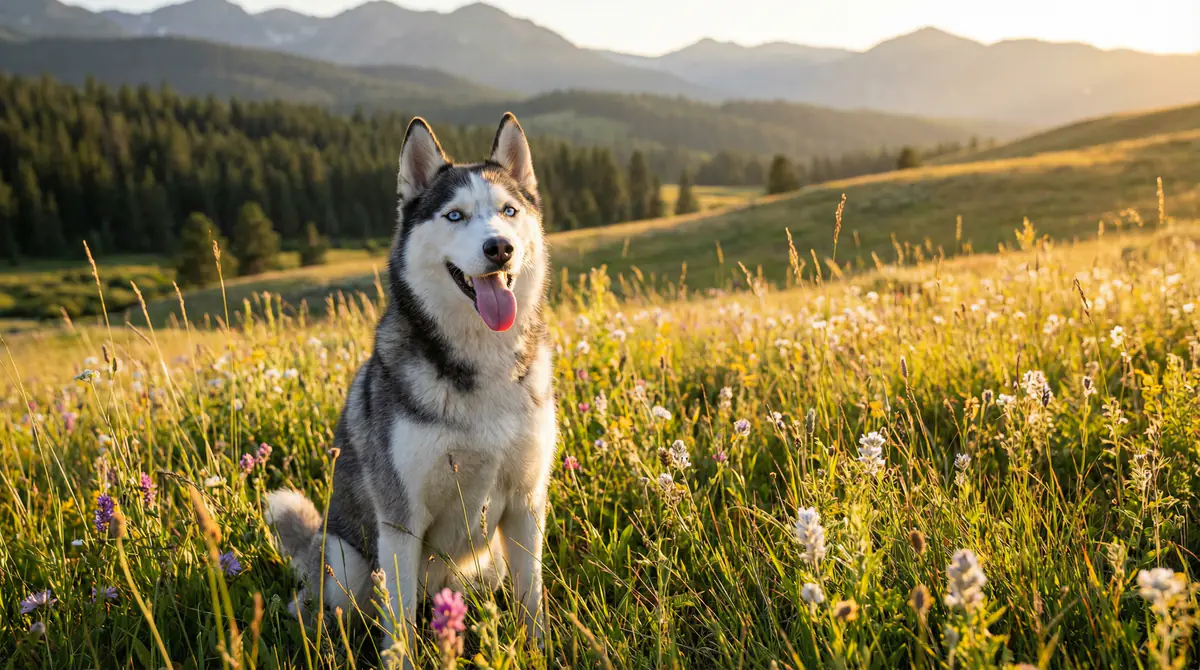
Huskies often stay lean and athletic; “light for the chart” can be normal if ribs are fine and your vet agrees.
Coat seasons change how heavy they look, trust palpation and trends.
If weight climbs while exercise drops, calories need adjustment, Huskies can become overweight couch potatoes too.
Feel ribs monthly; waist should exist when coat is parted visually.
High energy can mask fatigue, end activities before dehydration/overheat in warm climates.
Sudden weight loss with normal appetite warrants vet visit.
Un chiot, ce n’est pas qu’une phase : c’est une pile d’étapes différentes. Servez-vous de cela comme fil conducteur, pas comme loi absolue.
Containment, sleep, potty, cooperative handling.
Outlets + training + secure yard checks.
Brain games beat brute mileage.
Channel drive into structured outlets.
Nous associons quelques grandes familles utiles au quotidien (sommeil, marche, repas…) avec les réglages de gabarit et de croissance : des idées souvent très bien notées, cohérentes avec vos paramètres actuels.
Repas, sorties, éducation, maison, prévention — rédigé pour celles et ceux qui viennent de regarder la courbe de poids.
Measured meals; some individuals do well on specific formulations, vet guidance.
Treats still count; overweight Huskies happen.
Working drive does not mean free feeding; structure makes weight and stool easier to read.
Sniffing, running in safe enclosed spaces, and interactive play.
A yard must be secure; GPS collars are not a substitute for fencing for many dogs.
Build duration gradually; adolescent Huskies tolerate more than their joints should take if you let them.
Reward what you want; Huskies rehearse what works for them.
Recall training is lifelong maintenance, not graduation.
Fair expectations reduce frustration: some individuals will never be reliable off leash in open areas, and that is OK with good management.
Assume trash surfing, counter surfing, and sock theft.
Rotate enrichment so “quiet time” is a trained skill, not a surprise punishment.
Parasite control for your region; tick awareness if you hike.
Dental care, some lines have crowded mouths.
Eye issues can appear in some lines; squinting, discharge, or cloudiness deserve prompt vet attention.
En cas de doute, appelez surtout avec un chiot. Cette liste n’est ni exhaustive ni un guide d’urgence ; ce sont des rappels que beaucoup de cliniques veulent entendre tôt.
Information générale seulement : pas un avis médical ni un substitut à l’examen et au plan d’un vétérinaire diplômé. Les estimations et astuces ne diagnostiquent pas ; en cas de souci sanitaire, contactez votre clinique.
Loyal, mischievous, and outgoing
Working
Moyen
12-14 years
15 mois
Husky
35-60 lb
21-23.5 po de haut
35-60 lb
20-22 po de haut
Siberian Huskies were developed over centuries by the Chukchi and related peoples of northeast Asia as endurance sled dogs. They were bred to pull light loads over long distances in brutal cold, sleep in family shelters, and cooperate in tight teams, not to win short drag races.
In the early 1900s they reached Alaska, where they impressed mushers with speed relative to heavier freight dogs. The 1925 serum run to Nome, especially Leonhard Seppala’s dogs, turned them into American folk heroes and boosted interest in the breed.
Kennel clubs later split racing sprint lines from traditional Siberian type to some degree, but the through line is the same: high cooperation, high vocalization, high prey interest, and a metabolism that laughs at your “one walk” plan. History is not on the side of lazy fences.
Le simulateur s’appuie sur l’âge et le poids du moment pour estimer le gabarit adulte. Comme la croissance est très rapide au début puis ralentit, l’ajustement tient compte de l’étape où se trouve votre Siberian Husky.
Un Siberian Husky est en général proche de sa taille adulte vers 15 mois. Plus le chiot vieillit et plus une part de la croissance est déjà faite, plus l’estimation se stabilise.
La plupart des adultes Siberian Husky se situent habituellement entre 35 et 60 lb. Vous pouvez estimer très jeune, mais la fiabilité grimpe souvent après ~12 semaines.
Réponses directes sur la taille, la croissance, l’alimentation et comment utiliser ce simulateur avec votre véto.
Adult Siberian Huskies are often quoted around 35–60 lb, with individuals varying by sex, genetics, and activity level. They are built lean and athletic for endurance, so a healthy Husky can sit lighter on the scale than some other breeds of similar height. Use the calculator alongside waist photos and rib feel—not a generic “fluffy = fat” guess.
Huskies frequently stay race-fit in outline; “light for the chart” can be normal if ribs are easy to feel and energy is high. Seasonal coat changes also change how bulky they look—palpation and photos beat fluff alone. If weight climbs while exercise drops, calories usually need adjustment; couch-potato Huskies can become overweight too.
Many approach a lot of their frame by roughly 12–15 months, but conditioning and coat can keep changing after that. Focus on steady growth and appropriate exercise while young; boredom and under-stimulation often show up as digging, yelling, or escape attempts more than as polite requests for another walk.
They need real physical and mental work as they mature, but puppies are still growing—favor age-appropriate play, sniffing, and training over marathon mileage. Heat sensitivity exists even in northern breeds; provide water, shade, and rest. A tired brain (scent games, skills, structured play) often prevents more trouble than legs-only exhaustion.
The breed history is endurance, teamwork, and high prey interest—many individuals treat containment as a puzzle. Microchip, visible ID, and secure gates are baseline. Steady weight and honest food math make adult adventures easier to plan, but no calculator replaces supervision and training. If your adolescent tests barriers, fix the environment and involve a qualified trainer early.
Faites découvrir PetCareCalc à d’autres propriétaires ou gardez le lien pour plus tard.
À essayer aussi : Âge du chien (années chien et humaines) · Quiz des races
Ajoutez gratuitement notre simulateur à votre site.
Toujours en train de défiler ?
Quelques clics rapides, un résultat immédiat et un lien à envoyer dans le groupe — gratuit, sans compte.
C’est partiCroissance estimée pour votre Siberian Husky