Graphique personnalisé
Indiquez âge et poids pour voir la courbe de votre chien.
Jusqu’où ira mon Schipperke ? Poids adulte estimé et suivi de croissance.
Nous associons quelques grandes familles utiles au quotidien (sommeil, marche, repas…) avec les réglages de gabarit et de croissance : des idées souvent très bien notées, cohérentes avec vos paramètres actuels.
Grandes cages
Couchages douillets
Harnais prêts sortie
Gamelle interactive
Schipperke puppies are black fox imps with a big bark and bigger opinions. Your growth chart pairs with weight honesty, real mental work, and training that channels watchdog voice into skills.
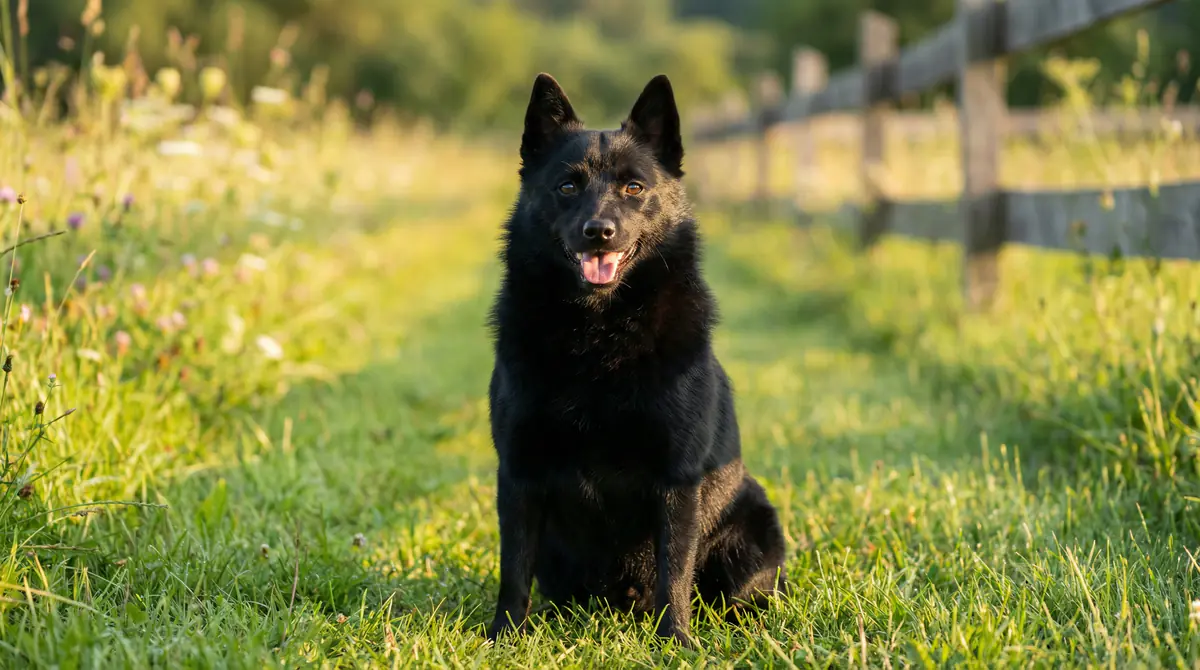
Schipperke are small but sturdy watchdogs; muscle shifts the scale while your veterinarian confirms condition. Read the projection as a trend across weeks, not one weekend trial.
Coat lies; hands-on rib checks monthly beat eyeballing black fluff.
When growth eases, treat drift climbs quietly if mental work drops but kitchen snacks do not.
They train fast with food; measured meals keep barky brains fed without thickening the waist.
Sound sensitivity appears in some lines; socialization stays sub-threshold—distance and calm pairing.
Prey interest is real; leash habits are safety near traffic and wildlife.
Un chiot, ce n’est pas qu’une phase : c’est une pile d’étapes différentes. Servez-vous de cela comme fil conducteur, pas comme loi absolue.
Routine, trade games, handling.
Leash skills before pulls win.
Mental work + boundaries.
Habits mature.
Nous associons quelques grandes familles utiles au quotidien (sommeil, marche, repas…) avec les réglages de gabarit et de croissance : des idées souvent très bien notées, cohérentes avec vos paramètres actuels.
Repas, sorties, éducation, maison, prévention — rédigé pour celles et ceux qui viennent de regarder la courbe de poids.
Your veterinarian picks puppy nutrition for steady growth.
Measured meals make training honest.
Transition foods over ~7 days unless your vet directs otherwise.
Sniff walks, play, swimming when safe and vet-approved.
End before overtired mouthiness or frantic alarm barking.
Heat planning; black coats absorb sun—favor cooler windows and water.
Clarity beats nagging; unfair nagging amps vocal Schipperke.
Socialization is pairing and distance; sub-threshold wins beat flooding.
Teach door manners early so visitors do not trigger rehearsed charging.
Fence checks; agile small dogs test height and gaps.
Rotate tough toys and food puzzles.
Eyes, patellas, and thyroid topics appear in breed education; your vet personalizes.
Dental tolerance training while young pays off for life.
Parasite control should match your region.
En cas de doute, appelez surtout avec un chiot. Cette liste n’est ni exhaustive ni un guide d’urgence ; ce sont des rappels que beaucoup de cliniques veulent entendre tôt.
Information générale seulement : pas un avis médical ni un substitut à l’examen et au plan d’un vétérinaire diplômé. Les estimations et astuces ne diagnostiquent pas ; en cas de souci sanitaire, contactez votre clinique.
Alert, curious, and confident
Non-Sporting
Petit
12-14 years
12 mois
10-16 lb
11-13 po de haut
10-16 lb
10-12 po de haut
Schipperke were developed in Belgium as small watchdogs on canal boats and in shops, prized for dark color, agility, and fearless alertness.
Their name links to “little captain”; they still captain households if you let them.
They are not a casual lap-only breed; boredom becomes barking, chewing, and escape tries.
Le simulateur s’appuie sur l’âge et le poids du moment pour estimer le gabarit adulte. Comme la croissance est très rapide au début puis ralentit, l’ajustement tient compte de l’étape où se trouve votre Schipperke.
Un Schipperke est en général proche de sa taille adulte vers 12 mois. Plus le chiot vieillit et plus une part de la croissance est déjà faite, plus l’estimation se stabilise.
La plupart des adultes Schipperke se situent habituellement entre 10 et 16 lb. Vous pouvez estimer très jeune, mais la fiabilité grimpe souvent après ~12 semaines.
Faites découvrir PetCareCalc à d’autres propriétaires ou gardez le lien pour plus tard.
À essayer aussi : Âge du chien (années chien et humaines) · Quiz des races
Ajoutez gratuitement notre simulateur à votre site.
Toujours en train de défiler ?
Quelques clics rapides, un résultat immédiat et un lien à envoyer dans le groupe — gratuit, sans compte.
C’est partiCroissance estimée pour votre Schipperke