Graphique personnalisé
Indiquez âge et poids pour voir la courbe de votre chien.
Jusqu’où ira mon Dachshund ? Poids adulte estimé et suivi de croissance.
Nous associons quelques grandes familles utiles au quotidien (sommeil, marche, repas…) avec les réglages de gabarit et de croissance : des idées souvent très bien notées, cohérentes avec vos paramètres actuels.
Grandes cages
Couchages douillets
Harnais prêts sortie
Gamelle interactive
Dachshund puppies are long, low, and convinced they are apex predators. Your growth estimate should sit next to back safety, weight discipline, and the hound nose that finds calories you forgot existed.
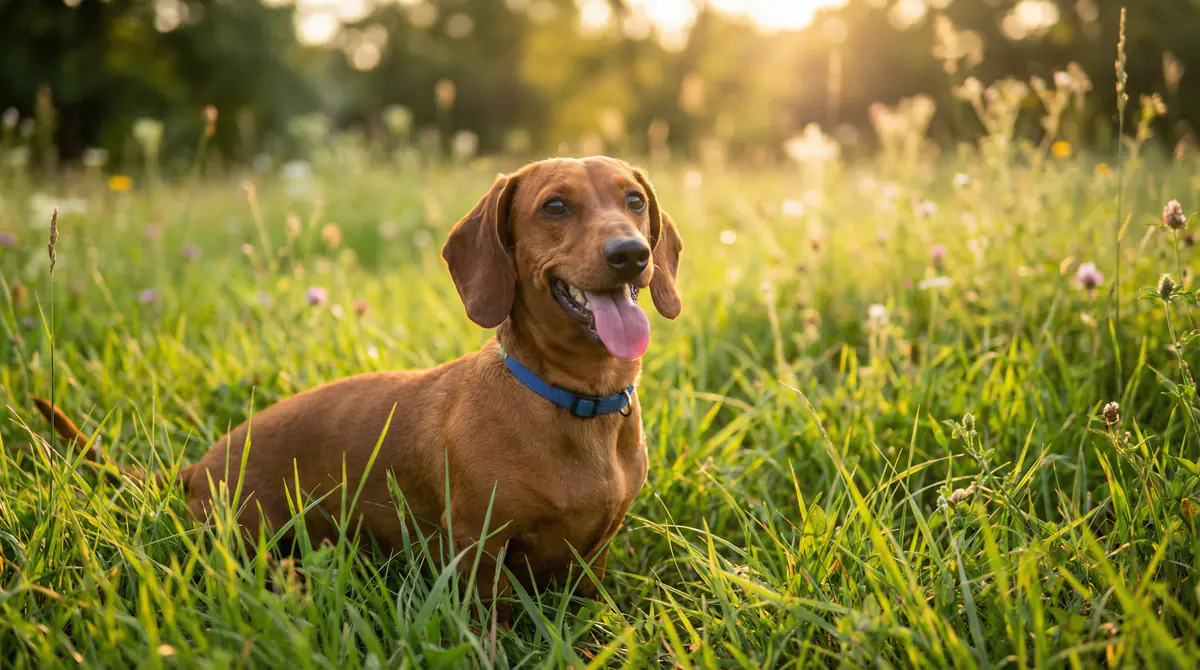
Extra ounces load a long spine disproportionately; lean is protective.
Puppy pudginess should not linger after growth slows; ask your vet to show you rib checks.
If the chart says fine but the waist disappears, trust condition over the midpoint.
Sudden reluctance to jump, hunched posture, or crying when lifted can be back pain; stop rough play and call your vet.
IVDD awareness is part of responsible ownership; prevention beats emergency surgery when you can help it.
Coat can hide weight; palpate ribs regularly.
Un chiot, ce n’est pas qu’une phase : c’est une pile d’étapes différentes. Servez-vous de cela comme fil conducteur, pas comme loi absolue.
Potty, sleep, handling, and management.
Leash and leave it under distraction.
Recall on long line; weight vigilance.
Keep lean, keep kind training.
Nous associons quelques grandes familles utiles au quotidien (sommeil, marche, repas…) avec les réglages de gabarit et de croissance : des idées souvent très bien notées, cohérentes avec vos paramètres actuels.
Repas, sorties, éducation, maison, prévention — rédigé pour celles et ceux qui viennent de regarder la courbe de poids.
Measured meals; free feeding and Dachshunds is a common obesity path.
Your vet picks the right growth diet; do not chase “round puppy” aesthetics.
Training treats must be tiny and counted.
Walks plus sniffing count as real work.
Jumping down is higher risk than jumping up for many long backs.
Swimming can be excellent when safe and supported; ask your vet.
Fair expectations: recall may never be perfect off leash in open areas.
Reward generously for small wins; stubborn is often underpaid.
Socialization includes sounds and surfaces at easy distances.
Ramps, blocked stairs, and no “fly off the couch” culture.
Assume they will find dropped food under furniture.
Dental and vaccine plans per your vet.
Discuss IVDD signs so you know what warrants urgent care.
Weight counseling at visits; backs feel every pound.
En cas de doute, appelez surtout avec un chiot. Cette liste n’est ni exhaustive ni un guide d’urgence ; ce sont des rappels que beaucoup de cliniques veulent entendre tôt.
Information générale seulement : pas un avis médical ni un substitut à l’examen et au plan d’un vétérinaire diplômé. Les estimations et astuces ne diagnostiquent pas ; en cas de souci sanitaire, contactez votre clinique.
Friendly, curious, and spunky
Hound
Petit
12-16 years
12 mois
Wiener Dog, Doxie, Standard Dachshund, Longhaired Dachshund, Smooth Dachshund, Wirehaired Dachshund
16-32 lb
8-9 po de haut
16-32 lb
8-9 po de haut
Dachshunds were developed in Germany to go to ground after badgers and other burrow animals. A flexible spine, loud voice, and fearless attitude were job requirements long before they were meme material.
Miniature sizes were later standardized for smaller quarry. The same hunting nerve appears in both sizes, just in different packaging.
Modern Dachshunds are mostly companions, but the original job explains digging, barking, and stubborn charm. It also explains why jumping off furniture and obesity are not “cute quirks,” they are orthopedic risks.
Le simulateur s’appuie sur l’âge et le poids du moment pour estimer le gabarit adulte. Comme la croissance est très rapide au début puis ralentit, l’ajustement tient compte de l’étape où se trouve votre Dachshund.
Un Dachshund est en général proche de sa taille adulte vers 12 mois. Plus le chiot vieillit et plus une part de la croissance est déjà faite, plus l’estimation se stabilise.
La plupart des adultes Dachshund se situent habituellement entre 16 et 32 lb. Vous pouvez estimer très jeune, mais la fiabilité grimpe souvent après ~12 semaines.
Réponses directes sur la taille, la croissance, l’alimentation et comment utiliser ce simulateur avec votre véto.
Standard Dachshunds are often quoted around 16–32 lb as adults, with miniatures smaller (this calculator’s breed entry reflects the standard size). Even a few extra pounds show up fast on a long, low frame, so steady condition usually lines up with an easier-moving adult. Compare your pup to its own trend and to parent size when you know it.
Their proportions put more load on the middle of the body than on a taller dog of the same weight. Extra padding changes how they jump, climb stairs, and play in the house. If the chart says “fine” but the waist disappears, trust body condition over the midpoint. Ramps, couch rules, and carrying on stairs when the jump is huge keep wear-and-tear hobbies from becoming daily habits.
Many are largely done growing in height by about a year, but appetite and scavenging instinct do not turn off—that is when easy weight gain shows up if food stays generous. Weigh every few weeks on the same scale and take monthly photos from above. Stick to measured meals unless a professional feeding plan says otherwise.
Walks plus sniffing count as real work. Jumping down from beds or couches is often harder on the body than jumping up for many long, low dogs—ramps and house rules beat “they’ll learn.” Use a harness to reduce neck strain on leash walks. If play looks off—sudden reluctance to use stairs or furniture—switch to easy sniff walks until your pup moves freely again.
It models typical timing for the breed entry you selected; hounds follow scent and opportunity, so calories found on walks or counters can change the real-world curve. Log weights consistently and secure trash, cat food, and kid snacks. If you have both standard and miniature Dachshunds in the family, use the matching breed page so growth expectations align.
Faites découvrir PetCareCalc à d’autres propriétaires ou gardez le lien pour plus tard.
À essayer aussi : Âge du chien (années chien et humaines) · Quiz des races
Ajoutez gratuitement notre simulateur à votre site.
Toujours en train de défiler ?
Quelques clics rapides, un résultat immédiat et un lien à envoyer dans le groupe — gratuit, sans compte.
C’est partiCroissance estimée pour votre Dachshund