Graphique personnalisé
Indiquez âge et poids pour voir la courbe de votre chien.
Jusqu’où ira mon Miniature Schnauzer ? Poids adulte estimé et suivi de croissance.
Nous associons quelques grandes familles utiles au quotidien (sommeil, marche, repas…) avec les réglages de gabarit et de croissance : des idées souvent très bien notées, cohérentes avec vos paramètres actuels.
Grandes cages
Couchages douillets
Harnais prêts sortie
Gamelle interactive
Miniature Schnauzer puppies are bearded little watchdogs with terrier spark. Pair your growth projection with pancreatitis smart feeding, confident training, and grooming tolerance built early.
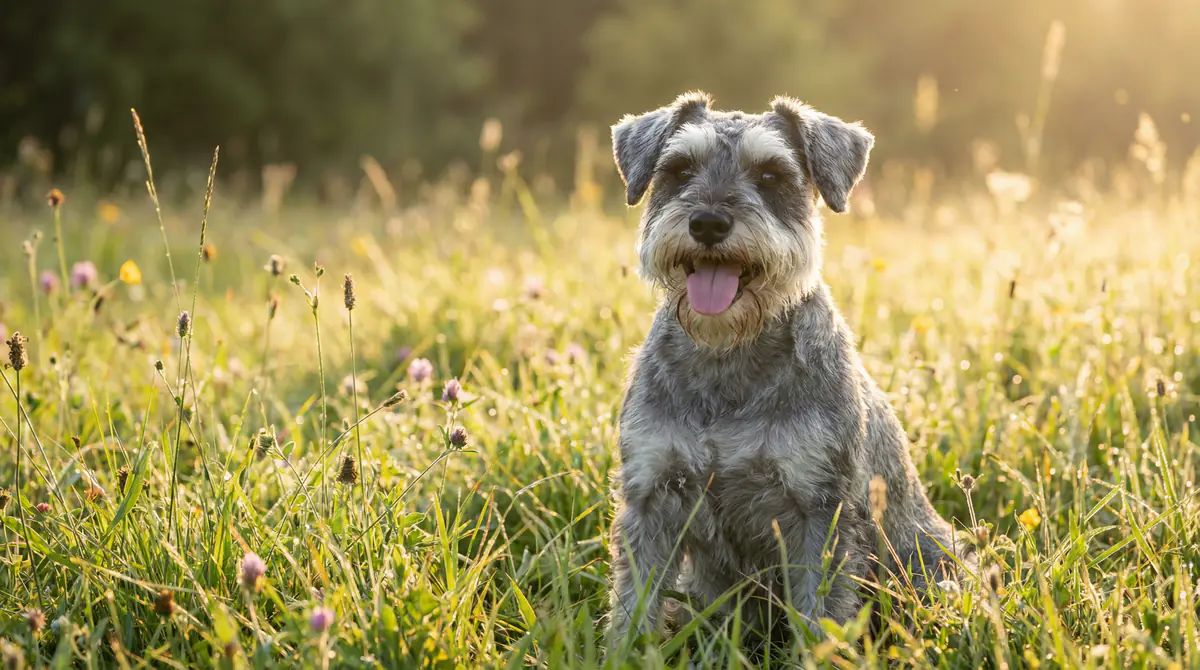
Minis vary in bone and coat; fluff can hide weight changes.
Steady growth beats spikes; ask your vet if a week looks weird.
If ribs disappear, revisit treats and measurement before blaming the chart.
Obesity raises many health risks in small dogs; lean is kind.
Sudden belly pain with vomiting can be serious in any dog; do not wait with small breeds.
Itchy skin or ear drama is common; vet beats Dr Internet for chronic cases.
Un chiot, ce n’est pas qu’une phase : c’est une pile d’étapes différentes. Servez-vous de cela comme fil conducteur, pas comme loi absolue.
Routine, potty, handling, calm exposure.
Impulse control and leash skills.
Channel alertness; watch weight.
Stable habits, lifelong grooming partnership.
Nous associons quelques grandes familles utiles au quotidien (sommeil, marche, repas…) avec les réglages de gabarit et de croissance : des idées souvent très bien notées, cohérentes avec vos paramètres actuels.
Repas, sorties, éducation, maison, prévention — rédigé pour celles et ceux qui viennent de regarder la courbe de poids.
Measured meals; your vet sets puppy portions.
High fat table scraps are a common mistake; ask your vet what “people food” means for your pup.
Treats are budgeted, especially on training heavy days.
Walks plus play satisfy most minis; they are sturdy but not marathon toys.
Mental work reduces destructive barking.
Heat and cold both deserve planning.
Teach a “thank you, dismissed” routine after alerts so barking has an off ramp.
Socialization includes sounds and surfaces at easy intensity.
Harsh corrections often increase defensiveness.
They will announce every delivery; management plus training.
Beard hygiene: clean food bowls; wipe face if your vet recommends.
Vaccines and parasite control per your vet.
Dental and ear plans early.
Discuss inherited concerns your breeder mentioned.
En cas de doute, appelez surtout avec un chiot. Cette liste n’est ni exhaustive ni un guide d’urgence ; ce sont des rappels que beaucoup de cliniques veulent entendre tôt.
Information générale seulement : pas un avis médical ni un substitut à l’examen et au plan d’un vétérinaire diplômé. Les estimations et astuces ne diagnostiquent pas ; en cas de souci sanitaire, contactez votre clinique.
Friendly, smart, and obedient
Terrier
Petit
12-15 years
12 mois
Schnauzer
11-20 lb
12-14 po de haut
11-20 lb
12-14 po de haut
The Schnauzer family began in Germany as versatile farm dogs: ratting, guarding, and all purpose barn help. The Miniature was scaled down from Standard stock to work closer quarters while keeping alertness and grit.
Wire coat, eyebrows, and whiskers were practical then fashionable; stripping and clipping traditions followed.
Today’s Minis are companions and alert barkers with strong opinions. Their working roots explain the voice, the chase interest, and the need for clear rules without harshness.
Le simulateur s’appuie sur l’âge et le poids du moment pour estimer le gabarit adulte. Comme la croissance est très rapide au début puis ralentit, l’ajustement tient compte de l’étape où se trouve votre Miniature Schnauzer.
Un Miniature Schnauzer est en général proche de sa taille adulte vers 12 mois. Plus le chiot vieillit et plus une part de la croissance est déjà faite, plus l’estimation se stabilise.
La plupart des adultes Miniature Schnauzer se situent habituellement entre 11 et 20 lb. Vous pouvez estimer très jeune, mais la fiabilité grimpe souvent après ~12 semaines.
Réponses directes sur la taille, la croissance, l’alimentation et comment utiliser ce simulateur avec votre véto.
Adult Minis are small dogs, often quoted around 11–20 lb. Individuals vary in bone and coat; a beard can hide weight changes, so hands-on rib checks matter. A few pounds off your pup’s best-looking waist is a large percentage on a little frame—let the trend line and photos set a sustainable adult target.
Many are close to adult size by about a year, but adolescence can still test your training and treat discipline. Weigh every few weeks when young; log training snacks because terriers learn fast for food. If ribs disappear before growth is finished, revisit measurement and extras before you blame the kibble.
Rich “people food” is dense calories in a tiny package—one greasy bite can replace a whole training session worth of kibble. Random table treats also make week-to-week weights harder to compare because portions stop being predictable. Stick to measured puppy food and bite-sized training rewards so your trend line stays honest.
They are alert watchdogs; mental exercise and consistent training reduce window-barking hobbies. Walks plus sniffing usually satisfy exercise needs—they are sturdy but not marathon-only athletes. Extra weight shows up fast on small dogs, so channel energy without doubling calories.
Same scale, same time of day, and look at direction over several weeks. Introduce grooming as positive early visits; stress and table begging both derail feeding plans. Short, frequent brush-and-handling sessions make adult coat care normal instead of a monthly wrestling match.
Faites découvrir PetCareCalc à d’autres propriétaires ou gardez le lien pour plus tard.
À essayer aussi : Âge du chien (années chien et humaines) · Quiz des races
Ajoutez gratuitement notre simulateur à votre site.
Toujours en train de défiler ?
Quelques clics rapides, un résultat immédiat et un lien à envoyer dans le groupe — gratuit, sans compte.
C’est partiCroissance estimée pour votre Miniature Schnauzer