Graphique personnalisé
Indiquez âge et poids pour voir la courbe de votre chien.
Jusqu’où ira mon Greyhound ? Poids adulte estimé et suivi de croissance.
Nous associons quelques grandes familles utiles au quotidien (sommeil, marche, repas…) avec les réglages de gabarit et de croissance : des idées souvent très bien notées, cohérentes avec vos paramètres actuels.
Grandes cages
Couchages douillets
Harnais prêts sortie
Gamelle interactive
Greyhound puppies are 45 mph couch potatoes in training. Your growth chart belongs with soft-surface exercise, never-trust-off-leash realism, and training that builds recall before squirrel season.
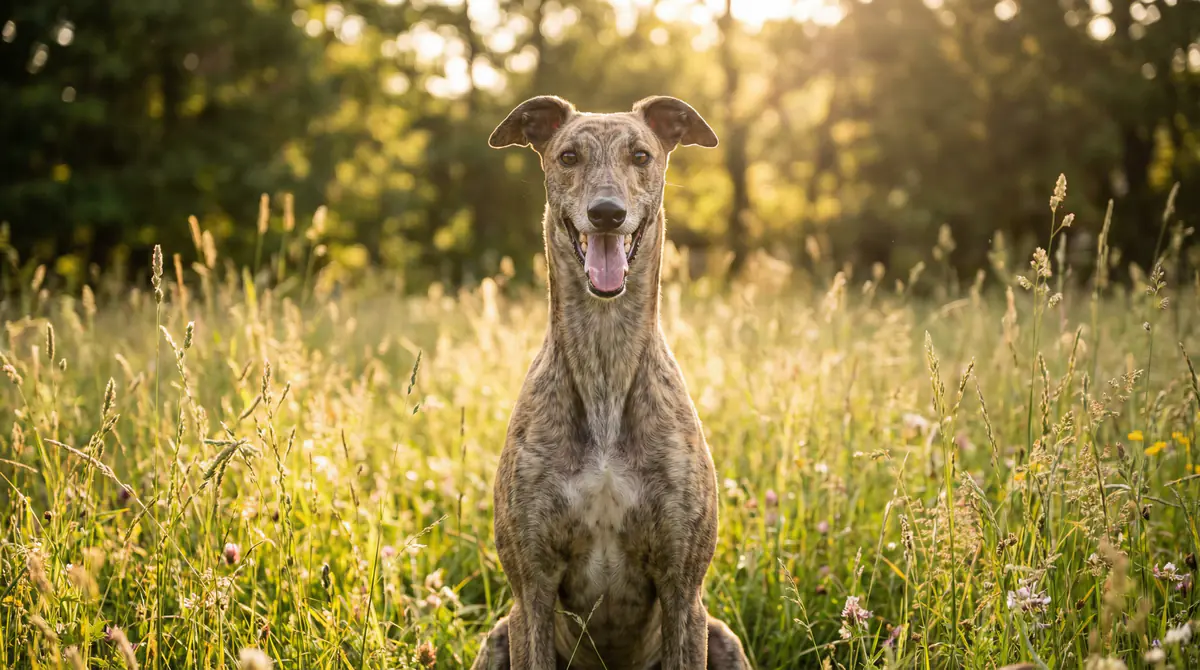
Growing Greyhounds often look lean and leggy; your vet confirms healthy condition, not internet opinions.
Muscle arrives on its own schedule; compare trends over weeks.
Weight can climb when sprint outlets drop but bowls stay full.
Rib visibility can be normal on some individuals; waist and muscle tell the story with your vet.
Thin skin and low body fat change injury risk; rough play with big dogs needs supervision.
Cold tolerance is poor; gear and indoor rest matter.
Un chiot, ce n’est pas qu’une phase : c’est une pile d’étapes différentes. Servez-vous de cela comme fil conducteur, pas comme loi absolue.
Routine, warmth, gentle exposure.
Leash and recall foundations.
Channel speed safely.
Rhythm matures.
Nous associons quelques grandes familles utiles au quotidien (sommeil, marche, repas…) avec les réglages de gabarit et de croissance : des idées souvent très bien notées, cohérentes avec vos paramètres actuels.
Repas, sorties, éducation, maison, prévention — rédigé pour celles et ceux qui viennent de regarder la courbe de poids.
Your vet sets calories for steady growth.
Measured meals support training.
Some lines are dramatic about food; keep routines calm.
Short bursts plus sniff walks.
Soft grass beats slick tile sprints.
End before exhaustion.
Motivate with cooperation; nagging teaches tuning out.
Socialization includes novel surfaces and sounds at tolerable levels.
Teach mat settle.
Thick soft beds.
Block unsafe jump routes if needed.
Cardiac auscultation schedules vary; follow your vet.
Parasite control for your region.
Dental routines early.
En cas de doute, appelez surtout avec un chiot. Cette liste n’est ni exhaustive ni un guide d’urgence ; ce sont des rappels que beaucoup de cliniques veulent entendre tôt.
Information générale seulement : pas un avis médical ni un substitut à l’examen et au plan d’un vétérinaire diplômé. Les estimations et astuces ne diagnostiquent pas ; en cas de souci sanitaire, contactez votre clinique.
Gentle, independent, and noble
Hound
Grand
10-12 years
17 mois
60-70 lb
28-30 po de haut
60-70 lb
27-28 po de haut
Greyhounds are ancient sighthounds refined for burst speed and coursing game across open ground, later standardized into racing and show lines with overlapping temperaments.
They were bred to see, chase, and close distance fast; prey drive is feature, not a bug.
Retired racers and purpose-bred pets share the same wiring: sprint, then sleep; leash near traffic is non-negotiable.
Le simulateur s’appuie sur l’âge et le poids du moment pour estimer le gabarit adulte. Comme la croissance est très rapide au début puis ralentit, l’ajustement tient compte de l’étape où se trouve votre Greyhound.
Un Greyhound est en général proche de sa taille adulte vers 17 mois. Plus le chiot vieillit et plus une part de la croissance est déjà faite, plus l’estimation se stabilise.
La plupart des adultes Greyhound se situent habituellement entre 60 et 70 lb. Vous pouvez estimer très jeune, mais la fiabilité grimpe souvent après ~12 semaines.
Faites découvrir PetCareCalc à d’autres propriétaires ou gardez le lien pour plus tard.
À essayer aussi : Âge du chien (années chien et humaines) · Quiz des races
Ajoutez gratuitement notre simulateur à votre site.
Toujours en train de défiler ?
Quelques clics rapides, un résultat immédiat et un lien à envoyer dans le groupe — gratuit, sans compte.
C’est partiCroissance estimée pour votre Greyhound