Graphique personnalisé
Indiquez âge et poids pour voir la courbe de votre chien.
Jusqu’où ira mon American Bulldog ? Poids adulte estimé et suivi de croissance.
Nous associons quelques grandes familles utiles au quotidien (sommeil, marche, repas…) avec les réglages de gabarit et de croissance : des idées souvent très bien notées, cohérentes avec vos paramètres actuels.
Grandes cages
Couchages douillets
Harnais prêts sortie
Gamelle interactive
American Bulldog puppies are strong working bulldogs with big hearts and serious muscle. Your growth chart pairs with large-breed joint sense, heat awareness, and training that builds manners before adolescent strength makes pulling a lifestyle.
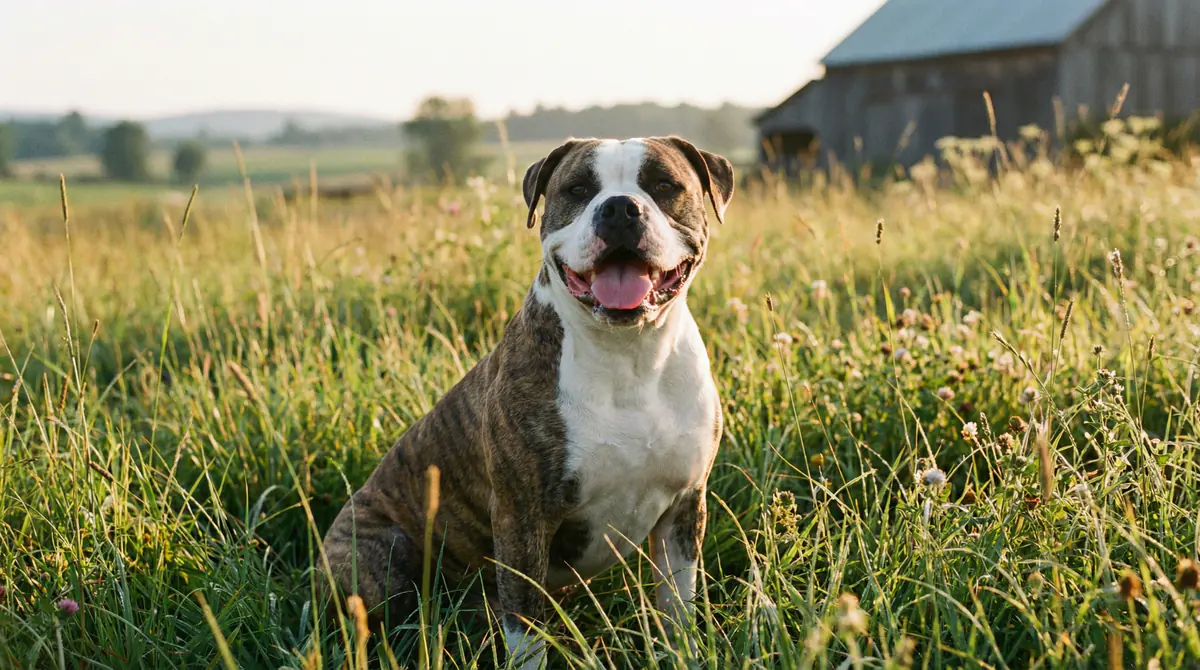
American Bulldogs grow into a large, athletic frame, but “Scott”-type lines often look leaner than heavier “Johnson”-style dogs at the same age. Your chart is a breed-average compass; compare your puppy to its own trend line and to parent size when you know it, not to random dogs online.
The short coat is honest about condition—still run hands along the ribs monthly and snap a standing photo from above so treats and toppers cannot hide a disappearing waist.
Muzzle length varies; some individuals tolerate heat better than others. Panting and recovery time after play tell you more than the clock does—shift walks to cooler hours and keep water breaks generous in summer.
American Bulldogs are often glued to people, which makes sympathy snacks tempting. Measured meals plus a treat budget keep adolescence from turning into “he looked hungry” portion creep.
Teenage listening dips are normal; lower criteria, shorten sessions, and pay well for basics again instead of arguing on a full leash.
Heat and humidity shrink comfortable exercise windows; indoor mat work, chews, and scent games finish the day when the sidewalk is still hot.
Un chiot, ce n’est pas qu’une phase : c’est une pile d’étapes différentes. Servez-vous de cela comme fil conducteur, pas comme loi absolue.
Routine, trade games, gentle exposure.
Leash skills before pulls win.
Channel drive; protect joints.
Athlete maturity.
Nous associons quelques grandes familles utiles au quotidien (sommeil, marche, repas…) avec les réglages de gabarit et de croissance : des idées souvent très bien notées, cohérentes avec vos paramètres actuels.
Repas, sorties, éducation, maison, prévention — rédigé pour celles et ceux qui viennent de regarder la courbe de poids.
Your veterinarian should help you pick a growth-appropriate diet and starting portions; large, muscular puppies do best when growth looks steady on the log, not spiky from random calorie swings.
Measured meals make training honest—you know when appetite truly changes versus when the bowl was eyeballed differently.
Change foods slowly over about a week unless your vet directs otherwise; loose stool makes weight trends impossible to read.
Think brisk walks, sniff sessions, and age-appropriate play on grass or dirt before you chase marathon pavement miles while your dog is still growing.
End outdoor sessions while your pup still has bounce; distress panting in heat means you already went too long.
Swimming can build fitness with low impact when water safety and your vet’s timing guidance align.
Teach door manners and calm greetings before adolescent strength makes pulling and jumping the default.
Socialization means novelty plus positive association at distances that keep tail wags—not flooding busy patios on day one.
Cooperation beats confrontation; fair clarity and high reinforcement rates build trust in powerful breeds.
Rotate tough chews and puzzle toys so boredom does not route straight to drywall.
Secure trash, counters, and compost; athletic dogs problem-solve for calories.
Hips, elbows, skin allergies, and cardiac topics show up in breed education; your vet personalizes what to watch for based on exam, lifestyle, and breeder paperwork.
Dental tolerance training while young makes later brushing and professional cleanings less stressful.
Parasite control depends on region and lifestyle—heartworm, ticks, and intestinal worms are not one-size-fits-all.
En cas de doute, appelez surtout avec un chiot. Cette liste n’est ni exhaustive ni un guide d’urgence ; ce sont des rappels que beaucoup de cliniques veulent entendre tôt.
Information générale seulement : pas un avis médical ni un substitut à l’examen et au plan d’un vétérinaire diplômé. Les estimations et astuces ne diagnostiquent pas ; en cas de souci sanitaire, contactez votre clinique.
Strong, muscular, and affectionate family dog
Working
Grand
10-12 years
18 mois
75-120 lb
22-28 po de haut
60-90 lb
20-26 po de haut
American Bulldogs descend from Old English Bulldog-type farm dogs in the American South, kept for stock work, hunting tasks, and family guardianship with athleticism relative to some show bulldogs.
Lines vary from leaner “Scott” types to heavier “Johnson” styles; exercise needs and silhouette differ.
Housing rules and insurance questions for strong breeds vary by region—know yours early.
Le simulateur s’appuie sur l’âge et le poids du moment pour estimer le gabarit adulte. Comme la croissance est très rapide au début puis ralentit, l’ajustement tient compte de l’étape où se trouve votre American Bulldog.
Un American Bulldog est en général proche de sa taille adulte vers 18 mois. Plus le chiot vieillit et plus une part de la croissance est déjà faite, plus l’estimation se stabilise.
La plupart des adultes American Bulldog se situent habituellement entre 60 et 120 lb. Vous pouvez estimer très jeune, mais la fiabilité grimpe souvent après ~12 semaines.
Faites découvrir PetCareCalc à d’autres propriétaires ou gardez le lien pour plus tard.
À essayer aussi : Âge du chien (années chien et humaines) · Quiz des races
Ajoutez gratuitement notre simulateur à votre site.
Toujours en train de défiler ?
Quelques clics rapides, un résultat immédiat et un lien à envoyer dans le groupe — gratuit, sans compte.
C’est partiCroissance estimée pour votre American Bulldog