Graphique personnalisé
Indiquez âge et poids pour voir la courbe de votre chien.
Jusqu’où ira mon Silky Terrier ? Poids adulte estimé et suivi de croissance.
Nous associons quelques grandes familles utiles au quotidien (sommeil, marche, repas…) avec les réglages de gabarit et de croissance : des idées souvent très bien notées, cohérentes avec vos paramètres actuels.
Grandes cages
Couchages douillets
Harnais prêts sortie
Gamelle interactive
Silky Terrier puppies are Australian toy athletes with a long jacket and terrier spark. Your growth chart pairs with coat discipline, tiny-dog safety, and training that keeps charm from becoming bossiness.
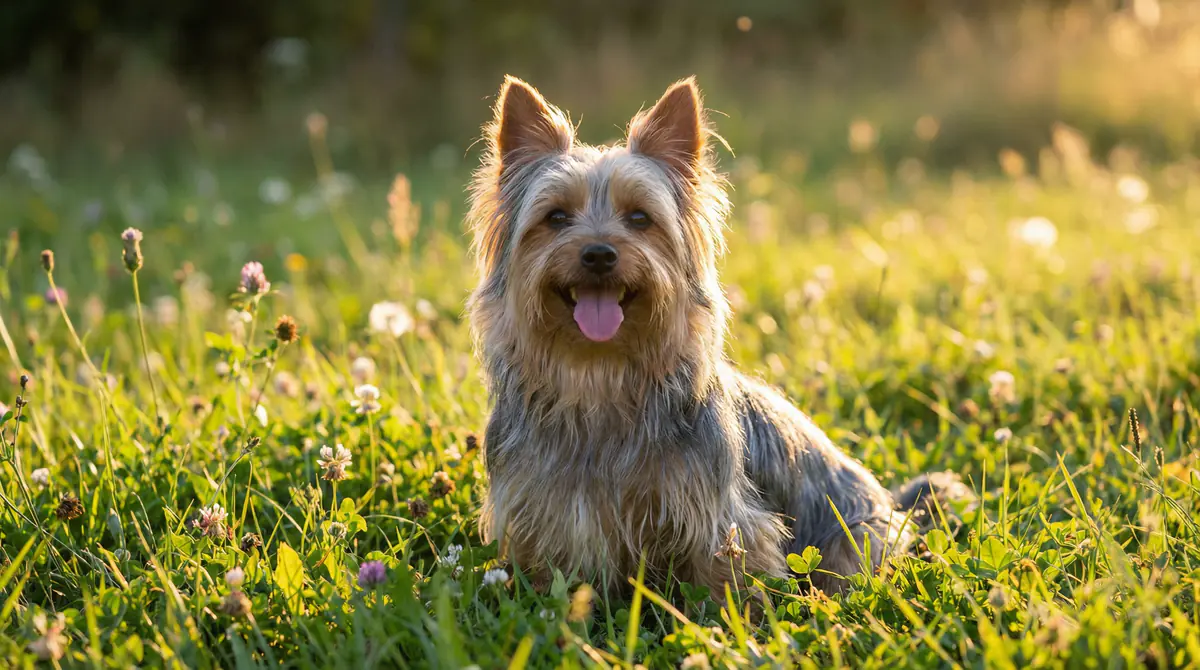
Silky Terriers mature quickly in toy terms—a few ounces on the scale is a large percentage of body weight, so weigh often while young and log dates.
The long jacket hides early padding; line-comb to skin on a rhythm and pair that with gentle rib checks so “fluff” does not replace condition checks.
When growth slows, “tiny” training treats and table bites show up as trend drift before the mirror says anything.
Line-comb to skin on schedule; mats tighten at the skin first and hurt.
Silkies train when you are fair and interesting; measured meals keep sessions from becoming accidental buffets.
Teen sass is sharp but short; shorten sessions and raise pay rather than escalating battles.
Un chiot, ce n’est pas qu’une phase : c’est une pile d’étapes différentes. Servez-vous de cela comme fil conducteur, pas comme loi absolue.
Routine, gentle handling, calm exposure.
Skills before sass hardens.
Clarity + safe exercise.
Habits lock in.
Nous associons quelques grandes familles utiles au quotidien (sommeil, marche, repas…) avec les réglages de gabarit et de croissance : des idées souvent très bien notées, cohérentes avec vos paramètres actuels.
Repas, sorties, éducation, maison, prévention — rédigé pour celles et ceux qui viennent de regarder la courbe de poids.
Your veterinarian should set calories for toy growth and adjust to your trend; frequent small meals often suit very young toys better than one huge bowl.
Measured meals support high-rep training without mystery calories.
Transition foods slowly; tiny guts protest loudly.
Short walks, play, and training reps add up; skipping exercise because “they’re small” invites bark and sass.
End before overtired mouthiness; tired toys get nippy.
Heat planning: water, shade, and carry breaks.
Kindness plus boundaries; small does not mean “no rules.”
Socialization is pairing and distance—novelty with confidence, not flooding.
Teach mat settle so “off” is a skill, not luck.
Safe spaces away from chaotic feet and swinging doors.
Rotate small toys and chews so boredom does not route to ankle biting.
Patella, trachea, dental, and eye topics appear in toy education; your vet personalizes exams and products.
Parasite prevention must be sized correctly for tiny patients.
Gradual nail care prevents sound gait issues.
En cas de doute, appelez surtout avec un chiot. Cette liste n’est ni exhaustive ni un guide d’urgence ; ce sont des rappels que beaucoup de cliniques veulent entendre tôt.
Information générale seulement : pas un avis médical ni un substitut à l’examen et au plan d’un vétérinaire diplômé. Les estimations et astuces ne diagnostiquent pas ; en cas de souci sanitaire, contactez votre clinique.
Friendly, quick, and spirited
Toy
Très petit
13-15 years
9 mois
8-10 lb
9-10 po de haut
8-10 lb
9-10 po de haut
Silky Terriers were developed in Australia from Yorkshire Terrier and Australian Terrier roots, aiming for a portable companion with true terrier attitude.
They are quick and brave; skipped training creates a noisy general.
Coat maintenance is daily math; mats tighten at the skin first.
Le simulateur s’appuie sur l’âge et le poids du moment pour estimer le gabarit adulte. Comme la croissance est très rapide au début puis ralentit, l’ajustement tient compte de l’étape où se trouve votre Silky Terrier.
Un Silky Terrier est en général proche de sa taille adulte vers 9 mois. Plus le chiot vieillit et plus une part de la croissance est déjà faite, plus l’estimation se stabilise.
La plupart des adultes Silky Terrier se situent habituellement entre 8 et 10 lb. Vous pouvez estimer très jeune, mais la fiabilité grimpe souvent après ~12 semaines.
Faites découvrir PetCareCalc à d’autres propriétaires ou gardez le lien pour plus tard.
À essayer aussi : Âge du chien (années chien et humaines) · Quiz des races
Ajoutez gratuitement notre simulateur à votre site.
Toujours en train de défiler ?
Quelques clics rapides, un résultat immédiat et un lien à envoyer dans le groupe — gratuit, sans compte.
C’est partiCroissance estimée pour votre Silky Terrier