Graphique personnalisé
Indiquez âge et poids pour voir la courbe de votre chien.
Jusqu’où ira mon Great Dane ? Poids adulte estimé et suivi de croissance.
Nous associons quelques grandes familles utiles au quotidien (sommeil, marche, repas…) avec les réglages de gabarit et de croissance : des idées souvent très bien notées, cohérentes avec vos paramètres actuels.
Grandes cages
Couchages douillets
Harnais prêts sortie
Gamelle interactive
Great Dane puppies grow faster than your camera roll. Your estimate is only useful next to slow steady growth, giant-breed nutrition talks with your vet, honest body-condition checks, and bloat awareness while habits form.
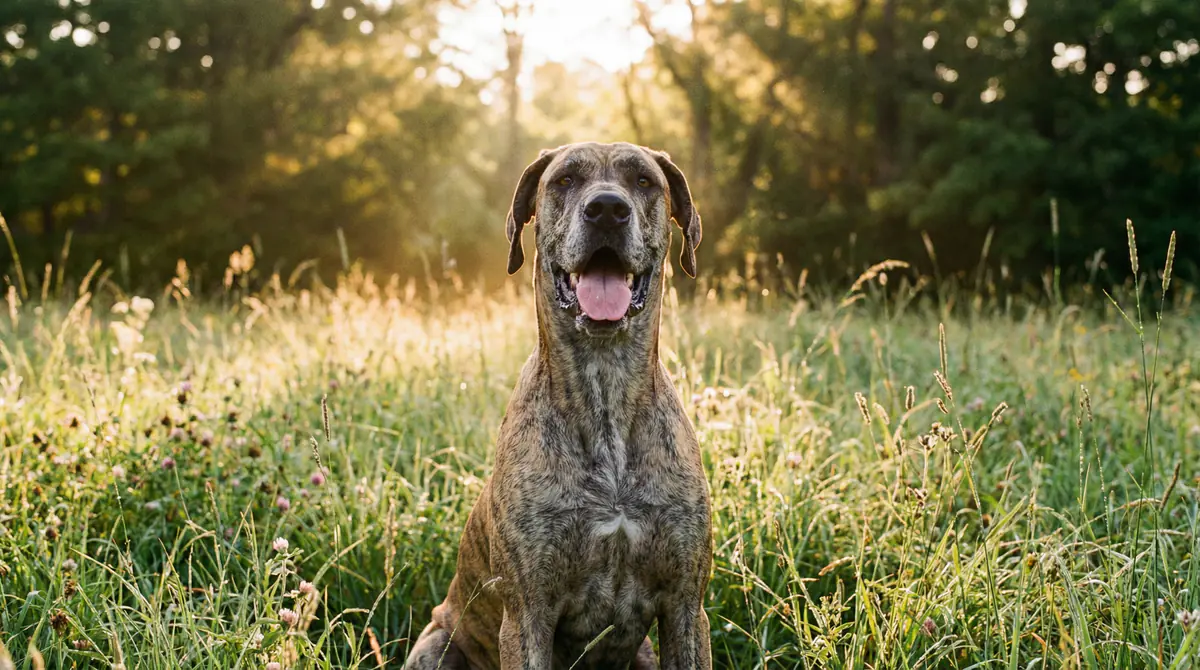
Great Danes should not be fed to maximize speed of growth. Your veterinarian helps you aim for steady—not racing—gain with calories and minerals appropriate to a giant, fast-growing frame; use the calculator as a trend across weeks, not a single number to chase.
Weekly scale changes can look dramatic; log weight on the same scale and time window so your vet sees real curves. Dane teens often go through leggy phases; compare body condition over time, not to random photos online.
If your pup looks round or “roly poly,” assume food or treat drift until your vet confirms otherwise—Danes train owners fast with soft eyes and polite begging.
Limping, bunny-hopping, or reluctance to rise in a giant puppy is always worth a veterinary call; do not wait or “walk it off” on rapidly growing limbs.
Knuckling, odd front-leg carriage, or sudden gait change needs prompt attention; early orthopedics conversations protect long-term soundness.
Bloat (GDV) risk rises with chest depth; learn painful swollen belly, unproductive retching, and restless pacing, and know your emergency clinic route before you need it.
Un chiot, ce n’est pas qu’une phase : c’est une pile d’étapes différentes. Servez-vous de cela comme fil conducteur, pas comme loi absolue.
Routine, sleep, potty, and gentle handling while coordination lags behind size.
Leash and impulse control before adolescent strength peaks.
Joint care under real size; calories and training both need discipline.
Many Danes mature slowly; strength and condition should ramp without chasing bulk.
Nous associons quelques grandes familles utiles au quotidien (sommeil, marche, repas…) avec les réglages de gabarit et de croissance : des idées souvent très bien notées, cohérentes avec vos paramètres actuels.
Repas, sorties, éducation, maison, prévention — rédigé pour celles et ceux qui viennent de regarder la courbe de poids.
Your veterinarian should guide giant- or large-breed puppy food choice and portions so growth stays controlled rather than spiked.
Multiple smaller meals often beat one huge bowl; discuss meal number, gulping, and timing with your vet as part of bloat-risk planning.
Treats still count; polite Danes overeat while looking starving—budget training rewards in grams.
Free play on soft ground and sniff walks beat forced mileage while tendons and bones mature.
End sessions before overtired mouthiness; giant puppies get sharky when exhausted.
Plan for heat and cold—shorten summer outings, add traction indoors, and protect paws from ice and salt when needed.
Polite greetings are a safety issue at adult size; teach calm sits before doors open and before petting.
Teach mat, crate chill, and calm praise so excitement has an off-switch at home.
Socialization includes sounds, surfaces, and novelty at distances that stay sub-threshold.
Bedding that supports joints and traction paths on slick floors reduce slip-and-sprain risk.
Elevated bowls only if your vet recommends them for your individual dog; one-size advice does not fit every Dane.
Frequent vet touchpoints are normal for giant puppies; growth and orthopedic questions belong in clinic.
Discuss screening topics your breeder raised—hips, elbows, cardiac, thyroid—your vet personalizes timing.
Dental tolerance training early pays off when adult teeth and jaws are huge.
En cas de doute, appelez surtout avec un chiot. Cette liste n’est ni exhaustive ni un guide d’urgence ; ce sont des rappels que beaucoup de cliniques veulent entendre tôt.
Information générale seulement : pas un avis médical ni un substitut à l’examen et au plan d’un vétérinaire diplômé. Les estimations et astuces ne diagnostiquent pas ; en cas de souci sanitaire, contactez votre clinique.
Friendly, patient, and dependable
Working
Géant
7-10 years
24 mois
Dane, Harlequin Great Dane, Blue Great Dane, Merle Great Dane, Mantle Great Dane
110-175 lb
30-32 po de haut
110-175 lb
28-30 po de haut
Great Danes descend from large hunting mastiff types in Europe, refined in Germany as boarhounds capable of serious work. The name in English says Denmark; the breed’s development is German mastiff history.
They became estate guardians and companions as hunting roles faded, carrying size and gentle temperament into the modern era.
Today’s Dane is a family dog that still thinks it is a lapdog. That giant heritage explains joint stress if growth is rushed, and why deep chest bloat conversations belong in every responsible home.
Le simulateur s’appuie sur l’âge et le poids du moment pour estimer le gabarit adulte. Comme la croissance est très rapide au début puis ralentit, l’ajustement tient compte de l’étape où se trouve votre Great Dane.
Un Great Dane est en général proche de sa taille adulte vers 24 mois. Plus le chiot vieillit et plus une part de la croissance est déjà faite, plus l’estimation se stabilise.
La plupart des adultes Great Dane se situent habituellement entre 110 et 175 lb. Vous pouvez estimer très jeune, mais la fiabilité grimpe souvent après ~12 semaines.
Réponses directes sur la taille, la croissance, l’alimentation et comment utiliser ce simulateur avec votre véto.
Great Danes are giants: adults are often quoted around 110–175 lb, with males frequently taller than females (your breed profile lists roughly 30–32" males and 28–30" females). Weekly weight changes can look dramatic on a puppy; log dates so you see curves, not vibes. Never use extra calories to “speed up” size.
They mature slowly compared with smaller breeds—your breed data uses a long growth window, and many giants are still filling out toward roughly two to three years. While young, favor free play on soft ground and calm water introduction as confidence grows over repetitive jogging or big repetitive jumps.
Choose an appropriate giant- or large-breed puppy food and follow the label for your pup’s current weight; growth should look steady, not racing. Skip random supplement stacks. Multiple smaller meals per day are often easier on the routine than one huge bowl, and many owners keep the first minutes after a big meal calmer than instant zoomies.
Giants eat a lot of food in total; splitting it into several measured meals keeps energy steady through the day and avoids one overwhelming bowl that turns into a nap-coma. Pair feeding times with a short calm window before intense backyard wrestling. Your weight log will show quickly if midnight snacks or “second dinner” sneak in.
Use a scale that can handle your pup as they grow; photo standing monthly and track food by weight. Rugs for traction, careful vehicle loading, and polite greetings matter: today’s jumping puppy becomes tomorrow’s safety issue. If the trend line jumps with no change to measured meals, hunt for secret snacks before you overhaul the diet.
Faites découvrir PetCareCalc à d’autres propriétaires ou gardez le lien pour plus tard.
À essayer aussi : Âge du chien (années chien et humaines) · Quiz des races
Ajoutez gratuitement notre simulateur à votre site.
Toujours en train de défiler ?
Quelques clics rapides, un résultat immédiat et un lien à envoyer dans le groupe — gratuit, sans compte.
C’est partiCroissance estimée pour votre Great Dane