Gráfico personalizado
Informe idade e peso para ver a trajetória única de seu cão.
Quanto meu Saluki (galgo persa) vai crescer? Preveja o peso adulto e acompanhe o desenvolvimento do seu filhote.
Selecionamos estes produtos para ajudar você a cuidar melhor do seu cão no dia a dia—do sono a passeios mais seguros, alimentação mais fácil e uma casa bem organizada. Cada espaço foi reduzido a opções bem avaliadas que combinam com o porte e a fase do seu cão.
Caixas espaçosas
Caminhas confortáveis
Peitorais prontos para passeio
Comedouros lentos
Saluki puppies are ancient desert sighthounds with floaty movement and catlike reserve. Your growth chart pairs with soft-surface exercise, containment you trust, and training that earns recall before prey drive finishes the lesson without you.
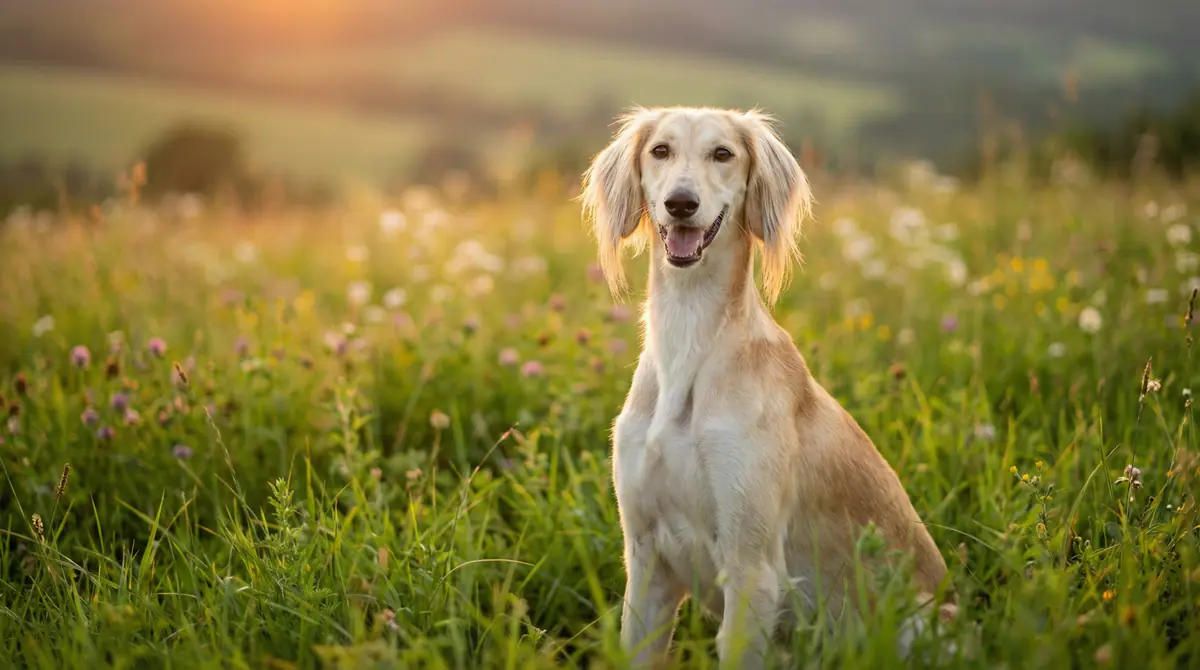
Salukis grow tall and often look lean; your veterinarian separates healthy sighthound condition from underweight. Read the projection as a trend across weeks, not one picky-eating week.
Rib visibility can be normal for some individuals; muscle tone and energy tell the rest of the story.
When growth eases, treat drift climbs if free sprint outlets disappear but couch snacks appear.
Feather adds visual weight; hands-on ribs monthly still catch drift.
Off-leash near roads or loose wildlife is gambling; prey drive finishes lessons without you.
Sensitivity is common; harsh training backfires into shutdown or bolt.
A fase de filhote não é um único estágio. É uma pilha de problemas e vitórias diferentes. Use isto como uma linha do tempo, não como um manual rígido.
Routine, gentle handling, calm exposure.
Leash and recall foundations.
Channel speed safely.
Partnership deepens.
Selecionamos estes produtos para ajudar você a cuidar melhor do seu cão no dia a dia—do sono a passeios mais seguros, alimentação mais fácil e uma casa bem organizada. Cada espaço foi reduzido a opções bem avaliadas que combinam com o porte e a fase do seu cão.
Alimentação, exercício, adestramento, organização da casa e prevenção. Cada bloco foi escrito para quem acabou de conferir a curva de peso do filhote.
Your veterinarian sets calories for steady growth; tall sighthounds need structure, not guesswork.
Measured meals make training honest.
Transition foods over ~7 days unless your vet directs otherwise.
Short bursts plus sniff walks beat mindless laps on slick floors.
Soft grass beats slick tile sprints while young.
End before exhaustion or frantic panting.
Make cooperation rewarding, not confrontational; pressure often triggers avoidance.
Socialization includes novel surfaces and sounds at comfortable distances.
Teach mat settle so the house has a down-regulation cue.
Six-foot fence reality check; Salukis assess height and gaps calmly.
Cozy rest spots; some Salukis hate cold wet and need jackets per your vet’s comfort guidance.
Cardiac and anesthesia sensitivity topics appear in sighthound education; your vet personalizes protocols.
Dental tolerance training while young pays off for life.
Parasite control should match your region and coursing or open-land exposure.
Se estiver em dúvida, ligue para o veterinário, especialmente com filhotes. Esta lista não é completa e não cobre todas as situações. É um lembrete geral de sinais que muitas clínicas querem saber.
Informação educativa geral apenas. Não é orientação médica e não substitui exame ou plano de tratamento de um veterinário licenciado. Estimativas e dicas não diagnosticam doença nem emergências; entre em contato com seu veterinário diante de qualquer preocupação de saúde.
Independent, quiet, and noble
Hound
Médio
10-17 years
15 meses
40-65 lbs
23-28" de altura
40-65 lbs
23-28" de altura
Salukis are among the oldest sighthound types, shaped in the Middle East and North Africa to course gazelle and hare over harsh terrain with stamina and independence.
They are not Lab-style eager pleasers; partnership is built on respect and consistency.
Modern Salukis are quiet housemates when exercise and secure space are honest.
A calculadora usa a idade e o peso atuais do seu filhote para estimar o tamanho adulto. Como os filhotes crescem mais rápido no início e depois desaceleram ao amadurecer, a estimativa se ajusta à fase de crescimento em que o seu Saluki (galgo persa) está.
Cães da raça Saluki (galgo persa) costumam estar perto do tamanho completo por volta dos 15 meses. Conforme o filhote envelhece e mais do crescimento já foi concluído, a estimativa costuma ficar mais confiável.
A maioria dos Saluki (galgo persa) adultos fica numa faixa típica de peso de 40-65 lbs. Você pode usar a calculadora com filhotes mais jovens, mas as estimativas costumam ser mais precisas depois de cerca de 12 semanas.
Compartilhe o PetCareCalc com outros tutores ou salve o link para voltar depois.
Experimente também: Calculadora de idade canina (anos de cão e anos humanos) · Quiz de raças
Adicione nossa calculadora gratuita e incorporável ao seu site.
Ainda rolando a página?
Cinco toques rápidos, um match na hora e um link para o grupo do chat. Grátis, sem cadastro.
ComeçarPrevendo o crescimento do seu Saluki (galgo persa)