Gráfico personalizado
Informe idade e peso para ver a trajetória única de seu cão.
Quanto meu Labrador retriever vai crescer? Preveja o peso adulto e acompanhe o desenvolvimento do seu filhote.
Selecionamos estes produtos para ajudar você a cuidar melhor do seu cão no dia a dia—do sono a passeios mais seguros, alimentação mais fácil e uma casa bem organizada. Cada espaço foi reduzido a opções bem avaliadas que combinam com o porte e a fase do seu cão.
Caixas espaçosas
Caminhas confortáveis
Peitorais prontos para passeio
Comedouros lentos
You came for a weight projection, here is how to use it, what to do this week, and how to get through the first year without second guessing every pound.
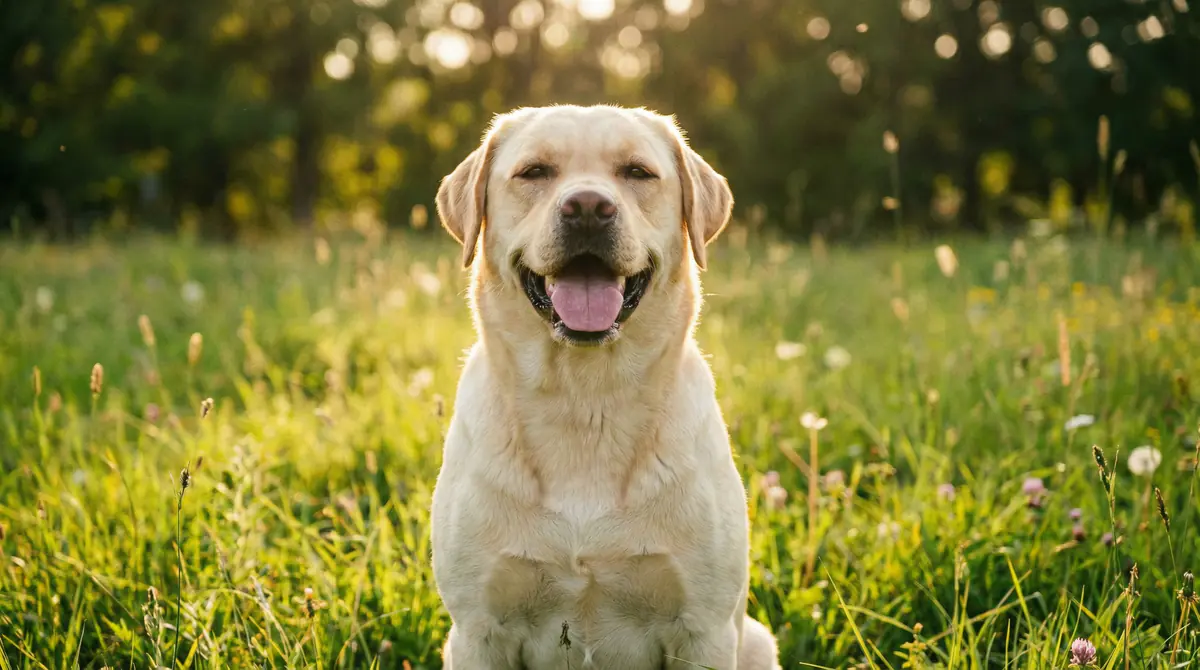
Your chart is a projection based on typical Labrador growth, not a diagnosis. Sex, genetics (English vs American lines), and whether your pup is pet or field bred can shift adult size by a noticeable margin.
If your puppy is around 14 weeks and near the middle of the breed range, that usually means you are in a normal window, but the next step is not obsessively rerunning numbers. It is pairing the estimate with body condition, appetite, and your vet’s exam.
Use the calculator as a compass: same scale, same time of day, log every 2 to 3 weeks while young. A smooth curve matters more than any single weigh in matching the midpoint.
Labs often look “skinny” during leg lengthening phases and then fill out through the second year. Body condition is individual; your vet can show you how to assess ribs, waist, and tuck at home without replacing an in-clinic exam.
Labs are famous for acting hungry on an empty stomach and a full one. “But he acts starving” is not a reliable feeding guide, measured meals and body condition are.
Sudden flattening or dropping off a growth curve, or racing far ahead while looking pudgy, is worth a conversation with your vet. Gradual drift is common; cliff edges less so.
A fase de filhote não é um único estágio. É uma pilha de problemas e vitórias diferentes. Use isto como uma linha do tempo, não como um manual rígido.
Survival mode for you, routine, sleep, potty, and gentle exposure.
Energy spikes, teething, and big curiosity.
Still growing, protect joints while burning steam.
Many Labs look lanky, then broaden, patience with conditioning.
Selecionamos estes produtos para ajudar você a cuidar melhor do seu cão no dia a dia—do sono a passeios mais seguros, alimentação mais fácil e uma casa bem organizada. Cada espaço foi reduzido a opções bem avaliadas que combinam com o porte e a fase do seu cão.
Alimentação, exercício, adestramento, organização da casa e prevenção. Cada bloco foi escrito para quem acabou de conferir a curva de peso do filhote.
Choose a diet appropriate for large breed puppies if your vet recommends it, growth should be steady, not racing.
Split meals into at least three feedings young, then taper to two as your vet advises. Labs do better on structure than grazing.
If you use kibble, measure with a scale, not a scoop eyeball. Calories vary wildly by brand and “heaping.”
Think “age appropriate volume.” Puppies need movement, but they are not miniature adult runners.
Off leash romps in safe spaces beat leash dragging miles for growing joints.
Swimming is often ideal once safe, low impact, high satisfaction for many Labs.
Socialization is “novelty + positive association,” not flooding. If your pup is worried, increase distance and decrease intensity.
Teach “drop it” and “leave it” early, Labs explore the world with their mouths.
Retrieve games are built in motivation; use two toy swaps to keep possession fun and trainable.
Predictable sleep/food/potty beats “winging it” for the first month.
Management prevents rehearsal: gates, crates, leashes indoors when you cannot supervise.
Parasite control, vaccines, and microchip are baseline, your vet sets the schedule for your region.
Dental care starts with tolerance; later brushing is easier if mouths are handled young.
Discuss hip and elbow awareness and exercise induced collapse if your line is known for it, your vet can personalize watch items.
Se estiver em dúvida, ligue para o veterinário, especialmente com filhotes. Esta lista não é completa e não cobre todas as situações. É um lembrete geral de sinais que muitas clínicas querem saber.
Informação educativa geral apenas. Não é orientação médica e não substitui exame ou plano de tratamento de um veterinário licenciado. Estimativas e dicas não diagnosticam doença nem emergências; entre em contato com seu veterinário diante de qualquer preocupação de saúde.
Friendly, active, and outgoing
Sporting
Grande
10-12 years
18 meses
Labradors are notorious for overeating. Since they are prone to obesity, precise weight monitoring is crucial.
Lab, Black Lab, Yellow Lab, Chocolate Lab, Fox Red Lab, Silver Lab, Field Labrador
65-80 lbs
22.5-24.5" de altura
55-70 lbs
21.5-23.5" de altura
Labs often have a 'teenage' phase where they look lanky before filling out their chest and muscle mass around 18 months.
The Lab’s ancestors were sturdy retrieving dogs used in Newfoundland by fishermen: athletic enough to work in cold water, willing to bring nets and lines, and biddable enough to partner with people on small boats.
Those dogs caught the eye of British sportsmen in the 1800s. Breeders in the United Kingdom crossed and refined them into the retrieving specialist we recognize today, selecting for soft mouths, marking ability, and the steady temperament that made Labs world famous as gundogs.
Over generations the breed split into overlapping types people still argue about: broader “English” show lines, leaner “American” field lines, and everything in between. Same breed name, different jobs and silhouettes, which is why your puppy’s adult frame may not match a random Lab on the internet.
A calculadora usa a idade e o peso atuais do seu filhote para estimar o tamanho adulto. Como os filhotes crescem mais rápido no início e depois desaceleram ao amadurecer, a estimativa se ajusta à fase de crescimento em que o seu Labrador retriever está.
Cães da raça Labrador retriever costumam estar perto do tamanho completo por volta dos 18 meses. Conforme o filhote envelhece e mais do crescimento já foi concluído, a estimativa costuma ficar mais confiável.
A maioria dos Labrador retriever adultos fica numa faixa típica de peso de 55-80 lbs. Você pode usar a calculadora com filhotes mais jovens, mas as estimativas costumam ser mais precisas depois de cerca de 12 semanas.
Respostas diretas sobre tamanho, crescimento, alimentação e como usar esta calculadora junto com o seu veterinário.
A maioria dos Labs adultos fica na faixa aproximada de 25–36 kg, com machos costumando ir para a faixa alta (cerca de 29–36 kg) e fêmeas frequentemente mais leves (cerca de 25–32 kg). O mesmo nome de raça ainda cobre linhagens de exposição “inglesas” mais robustas e linhagens de campo “americanas” mais magras, então dois filhotes saudáveis podem cair em pontas diferentes da faixa. Use a calculadora como ferramenta de tendência junto com checagens simples em casa (cintura vista de cima, costelas fáceis de sentir)—não como um único número-alvo.
Labs costumam passar por uma fase “adolescente” de pernas longas: eles esticam para cima antes de preencher peito e ombros. Esse visual comprido pode ser normal enquanto ainda amadurecem. O que importa é ganho de peso constante ao longo das semanas, boa energia e uma cintura visível quando você olha de cima. Se a linha de tendência do seu registro parecer estranha por várias semanas, confira porções e petiscos antes de culpar o gráfico.
Altura e boa parte da estrutura costumam se reunir por volta de 12–18 meses, mas muitos Labs continuam alargando e ganhando músculo depois disso—seu perfil da raça nota que o preenchimento perto da janela dos 18 meses é comum. O crescimento deve parecer suave no seu registro de peso; semanas isoladas irregulares são normais, mas a direção ao longo do mês deve fazer sentido.
Pese na mesma balança, no mesmo horário do dia (muitas vezes antes do café da manhã) e registre a cada poucas semanas enquanto o filhote for jovem—tendências vencem pesagens isoladas. Estimativas costumam ser mais úteis depois de cerca de 12 semanas, quando o ruído nutricional inicial diminui. Pareie a projeção com refeições medidas e condição corporal; Labs são famosos por agir com fome mesmo quando não estão subalimentados, então “implorar” não é guia confiável de alimentação.
Sim. Labradores são bem conhecidos por comer demais e ganhar peso com facilidade. Porções precisas (balança de cozinha ganha de olhômetro na concha) e contar petiscos de treino como parte da comida do dia mantêm a curva honesta. Se seu filhote sobe a curva depressa enquanto a cintura some nas fotos, corte extras antes de aumentar o tamanho da refeição.
Compartilhe o PetCareCalc com outros tutores ou salve o link para voltar depois.
Experimente também: Calculadora de idade canina (anos de cão e anos humanos) · Quiz de raças
Adicione nossa calculadora gratuita e incorporável ao seu site.
Ainda rolando a página?
Cinco toques rápidos, um match na hora e um link para o grupo do chat. Grátis, sem cadastro.
ComeçarPrevendo o crescimento do seu Labrador retriever