Gráfico personalizado
Informe idade e peso para ver a trajetória única de seu cão.
Quanto meu Dachshund miniatura vai crescer? Preveja o peso adulto e acompanhe o desenvolvimento do seu filhote.
Selecionamos estes produtos para ajudar você a cuidar melhor do seu cão no dia a dia—do sono a passeios mais seguros, alimentação mais fácil e uma casa bem organizada. Cada espaço foi reduzido a opções bem avaliadas que combinam com o porte e a fase do seu cão.
Caixas espaçosas
Caminhas confortáveis
Peitorais prontos para passeio
Comedouros lentos
Miniature Dachshund puppies are compact hounds with a big voice and brave heart. Your growth chart pairs with back protection as religion, honest weight, and training that uses ramps and rules so a long spine stays happy.
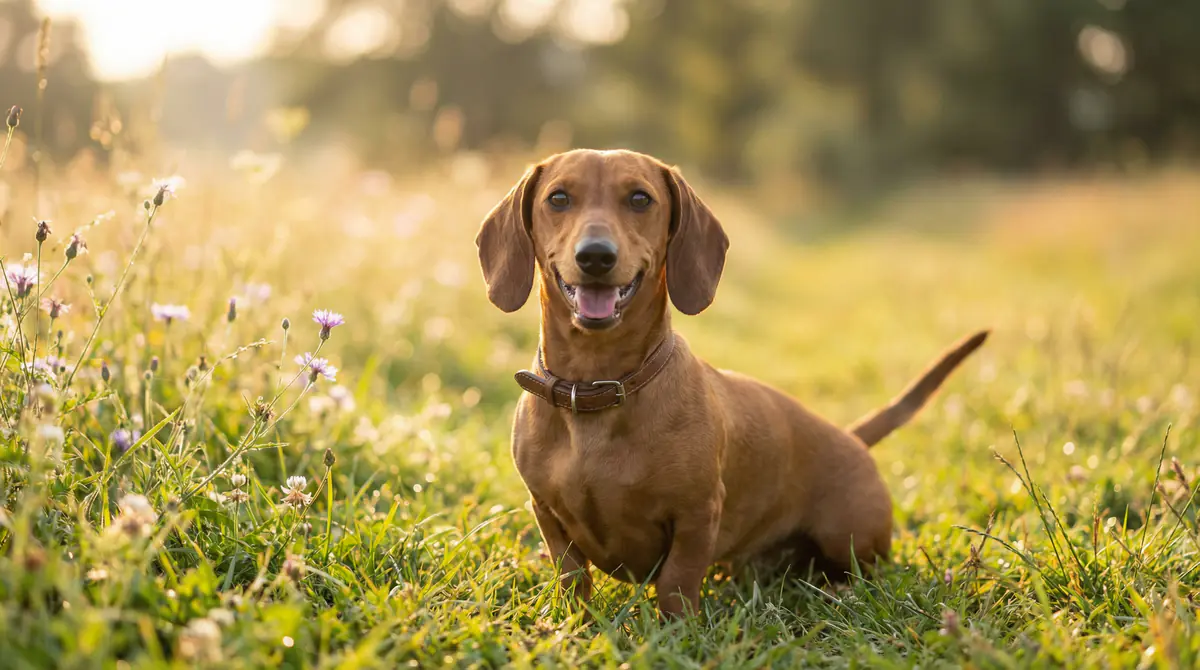
Miniature Dachshunds are tiny but easy to overfeed; each extra ounce is a larger percentage of body weight than on a tall dog, and it changes how they carry themselves on a long back.
Hands-on rib checks weekly while young pair with the scale so “fluff” or a smooth coat cannot hide early drift.
When growth slows, snack generosity and smaller walks show on the log—honest treat accounting keeps the curve readable.
Lean, steady condition is the usual goal for long-backed dogs; your veterinarian helps you judge what that looks like on your individual pup.
They train enthusiastically for food; measured meals keep shaping sessions from replacing measured dinner.
Jumping off beds and couches is a habit that gets expensive—ramps, rules, and lifts are kindness, not spoiling.
A fase de filhote não é um único estágio. É uma pilha de problemas e vitórias diferentes. Use isto como uma linha do tempo, não como um manual rígido.
Routine, gentle handling, calm exposure.
Skills before stubbornness hardens.
Mental work + back sense.
Habits lock in.
Selecionamos estes produtos para ajudar você a cuidar melhor do seu cão no dia a dia—do sono a passeios mais seguros, alimentação mais fácil e uma casa bem organizada. Cada espaço foi reduzido a opções bem avaliadas que combinam com o porte e a fase do seu cão.
Alimentação, exercício, adestramento, organização da casa e prevenção. Cada bloco foi escrito para quem acabou de conferir a curva de peso do filhote.
Your veterinarian should set calories to keep growth steady; extra weight on a long back changes comfort and mobility over time.
Measured meals support training without mystery calories from “just one more” moments.
Transition foods slowly; gut upset makes the weight log meaningless for a week.
Walks, sniffing, and play on level ground build fitness without turning every day into stunt practice.
End before overtired mouthiness; tired hounds get loud and stubborn.
Avoid letting weight creep early; prevention is simpler than reversal.
Kind consistency; hounds notice unfairness and dig in.
Socialization is pairing and distance—novelty with confidence, not chaos.
Teach mat settle so “off” is trained, not hoped for.
Ramp training early; habits form before the dog “needs” them.
Block off tall jumps and train household rules before adolescence tests every shortcut.
IVDD, dental disease, patella, and eye topics appear in Dachshund education; your vet personalizes what to watch for.
Parasite control should match your region and lifestyle.
Gradual nail care supports sound movement on short legs.
Se estiver em dúvida, ligue para o veterinário, especialmente com filhotes. Esta lista não é completa e não cobre todas as situações. É um lembrete geral de sinais que muitas clínicas querem saber.
Informação educativa geral apenas. Não é orientação médica e não substitui exame ou plano de tratamento de um veterinário licenciado. Estimativas e dicas não diagnosticam doença nem emergências; entre em contato com seu veterinário diante de qualquer preocupação de saúde.
Spunky, curious, and compact
Hound
Toy
12-16 years
9 meses
Mini Dachshund, Mini Doxie, Mini Wiener Dog, Miniature Longhaired Dachshund, Miniature Wirehaired Dachshund, Miniature Smooth Dachshund
8-11 lbs
5-6" de altura
8-11 lbs
5-6" de altura
Dachshunds were developed in Germany as badger and vermin dogs with a long low frame for tunnel work; miniatures were bred down for smaller quarry while keeping hound persistence.
Smooth, long, and wire coats share the same spinal realities.
Modern mini Doxies are beloved companions; stairs and jumping mistakes are expensive.
A calculadora usa a idade e o peso atuais do seu filhote para estimar o tamanho adulto. Como os filhotes crescem mais rápido no início e depois desaceleram ao amadurecer, a estimativa se ajusta à fase de crescimento em que o seu Dachshund miniatura está.
Cães da raça Dachshund miniatura costumam estar perto do tamanho completo por volta dos 9 meses. Conforme o filhote envelhece e mais do crescimento já foi concluído, a estimativa costuma ficar mais confiável.
A maioria dos Dachshund miniatura adultos fica numa faixa típica de peso de 8-11 lbs. Você pode usar a calculadora com filhotes mais jovens, mas as estimativas costumam ser mais precisas depois de cerca de 12 semanas.
Compartilhe o PetCareCalc com outros tutores ou salve o link para voltar depois.
Experimente também: Calculadora de idade canina (anos de cão e anos humanos) · Quiz de raças
Adicione nossa calculadora gratuita e incorporável ao seu site.
Ainda rolando a página?
Cinco toques rápidos, um match na hora e um link para o grupo do chat. Grátis, sem cadastro.
ComeçarPrevendo o crescimento do seu Dachshund miniatura