Gráfico personalizado
Informe idade e peso para ver a trajetória única de seu cão.
Quanto meu Mastiff inglês vai crescer? Preveja o peso adulto e acompanhe o desenvolvimento do seu filhote.
Selecionamos estes produtos para ajudar você a cuidar melhor do seu cão no dia a dia—do sono a passeios mais seguros, alimentação mais fácil e uma casa bem organizada. Cada espaço foi reduzido a opções bem avaliadas que combinam com o porte e a fase do seu cão.
Caixas espaçosas
Caminhas confortáveis
Peitorais prontos para passeio
Comedouros lentos
Mastiff puppies are giant precocious: huge paws, soft hearts, and joints that need slow steady growth. Your chart is useful only next to giant-breed feeding talks with your vet, honest body-condition checks, and patience while maturity arrives late.
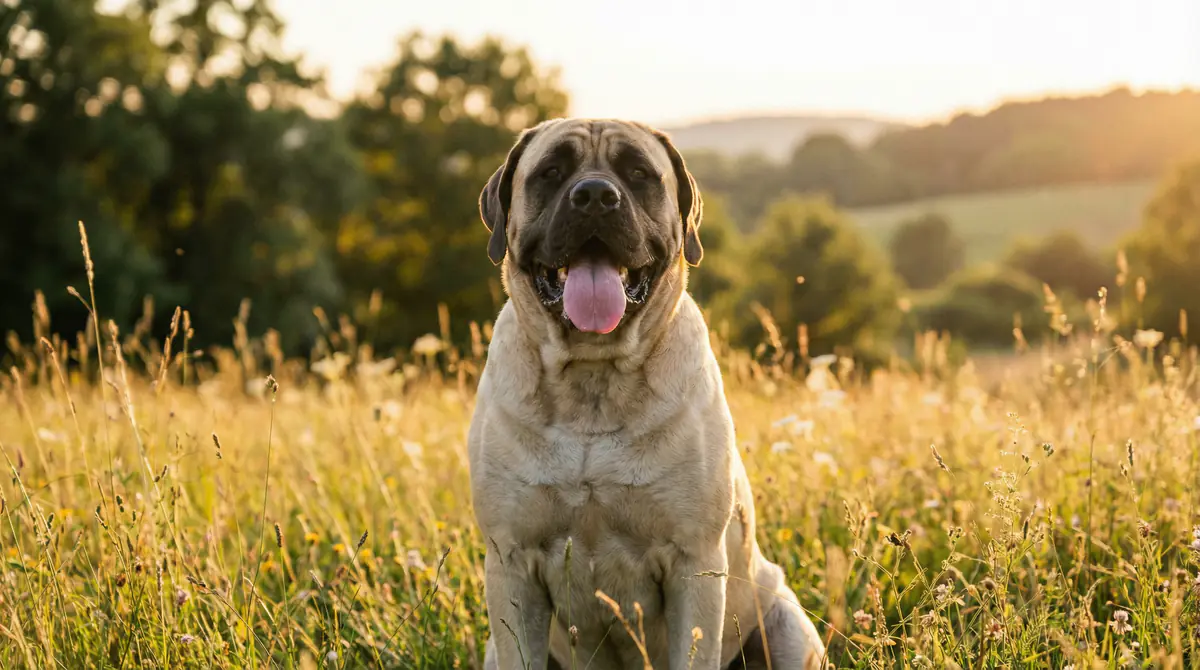
Mastiffs should not be fed to maximize speed of growth. Your veterinarian helps you aim for steady—not racing—gain, with calories and minerals matched to a giant frame; the calculator is a trend line across weeks, not a target to “hit” with extra scoops.
Weekly changes can look dramatic on the scale; log date, time of day, and same scale so your vet sees curves, not vibes. Teens often look gangly before they fill out; compare condition over time, not to a random dog online.
If your pup looks round or “roly poly,” assume portion or treat drift until proven otherwise—guests love feeding Mastiffs, and polite giants still overeat. Ask before adding calories or DIY supplements.
Limping, bunny-hopping, or reluctance to rise in a giant puppy warrants a prompt veterinary call; “walking it off” is a bad bet on heavy, fast-growing bone.
Bloat (GDV) awareness belongs in every deep-chested home: learn painful swollen belly, unproductive retching, and restless pacing, and know your emergency route.
Heat and humidity hit giants hard; favor cooler walk windows, water, shade, and shorter outings before distress panting. Cold and ice need limits too—slips and sore paws scale with weight.
A fase de filhote não é um único estágio. É uma pilha de problemas e vitórias diferentes. Use isto como uma linha do tempo, não como um manual rígido.
Routine, sleep, potty, and gentle handling before size makes habits expensive.
Leash and manners before adolescent strength wins every argument.
Joint care under real weight; training and calories both need honesty.
Many Mastiffs mature slowly; nerve and body fill on a longer timeline than small breeds.
Selecionamos estes produtos para ajudar você a cuidar melhor do seu cão no dia a dia—do sono a passeios mais seguros, alimentação mais fácil e uma casa bem organizada. Cada espaço foi reduzido a opções bem avaliadas que combinam com o porte e a fase do seu cão.
Alimentação, exercício, adestramento, organização da casa e prevenção. Cada bloco foi escrito para quem acabou de conferir a curva de peso do filhote.
Your veterinarian should guide giant- or large-breed puppy food choice and portions so growth stays steady rather than spiked.
Multiple smaller meals often beat one huge bowl; discuss meal timing and gulping with your vet as part of bloat-risk reduction—not internet folklore alone.
Treats must be planned; Mastiffs train easily with food and can overeat politely while looking “hungry.”
Free play on soft grass or forgiving surfaces beats forced mileage while bones and tendons mature.
End sessions before overtired mouthiness; giant puppies turn into bitey, heavy sharks when exhausted.
Plan for both heat and cold—shorten outings, add traction indoors, and avoid ice and salt pain when possible.
Polite greetings are a safety issue before adult mass; teach calm sits before doors open and before petting.
Teach mat, crate chill, and calm praise so the house has an off-switch between excitement.
Socialization means novelty at comfortable distances; sub-threshold wins beat flooding that rehearses suspicion.
Bedding that supports joints and non-slip paths reduce strain; slick tile plus adolescent enthusiasm equals injury risk.
Elevated bowls only if your vet recommends them for your individual dog; defaults vary by clinic and study.
Frequent vet touchpoints are normal for giant puppies; growth and orthopedic questions belong in clinic, not only in group chats.
Discuss screening topics your breeder raised—hips, elbows, cardiac watch items—your vet personalizes timing and follow-up.
Dental tolerance training early pays off when adult mouths are massive.
Se estiver em dúvida, ligue para o veterinário, especialmente com filhotes. Esta lista não é completa e não cobre todas as situações. É um lembrete geral de sinais que muitas clínicas querem saber.
Informação educativa geral apenas. Não é orientação médica e não substitui exame ou plano de tratamento de um veterinário licenciado. Estimativas e dicas não diagnosticam doença nem emergências; entre em contato com seu veterinário diante de qualquer preocupação de saúde.
Courageous, dignified, and good-natured
Working
Gigante
6-10 years
24 meses
English Mastiff
120-230 lbs
30" de altura
120-230 lbs
27.5" de altura
Mastiff type dogs appear across ancient cultures as guardians and war dogs. The English Mastiff became the massive, mellow estate guardian known for courage and calm with family.
Their job was presence and protection more than endless running.
Modern Mastiffs are companions first. History explains protectiveness and sheer mass; it also explains why rushing growth or skipping vet guidance is risky.
A calculadora usa a idade e o peso atuais do seu filhote para estimar o tamanho adulto. Como os filhotes crescem mais rápido no início e depois desaceleram ao amadurecer, a estimativa se ajusta à fase de crescimento em que o seu Mastiff inglês está.
Cães da raça Mastiff inglês costumam estar perto do tamanho completo por volta dos 24 meses. Conforme o filhote envelhece e mais do crescimento já foi concluído, a estimativa costuma ficar mais confiável.
A maioria dos Mastiff inglês adultos fica numa faixa típica de peso de 120-230 lbs. Você pode usar a calculadora com filhotes mais jovens, mas as estimativas costumam ser mais precisas depois de cerca de 12 semanas.
Respostas diretas sobre tamanho, crescimento, alimentação e como usar esta calculadora junto com o seu veterinário.
Mastiffs ingleses são verdadeiros gigantes—adultos costumam ser citados na faixa de cerca de 54–104 kg, com machos frequentemente maiores que fêmeas (seu perfil da raça lista cerca de 76 cm machos e 70 cm fêmeas). O crescimento deve ser constante, não apressado; nunca alimente a mais para "acelerar" o tamanho. Seu próprio registro datado ajuda a ler a curva melhor do que a memória.
Raças gigantes amadurecem lentamente—seus dados da raça usam uma janela longa de crescimento, e muitos Mastiffs ainda estão preenchendo perto de cerca de dois a três anos. Mudanças semanais de peso podem parecer dramáticas; registrar datas transforma drama em dados. Se o filhote parecer roliço, confira de novo o tamanho da concha e registros de petiscos antes de assumir que a comida está errada.
Escolha uma ração de filhote de raça gigante ou grande e siga o rótulo para o peso atual do filhote; o crescimento deve parecer constante, não uma corrida. Várias refeições menores por dia costumam ganhar de uma tigela enorme, e muitas casas mantêm os primeiros minutos depois de comer mais calmos do que brincadeira de sprint. Pule pilhas caseiras de minerais a menos que um plano de alimentação chame por elas explicitamente.
Favoreça brincadeira livre em solo macio e introdução calma à água conforme a confiança cresce em vez de corrida forçada no asfalto enquanto jovem. O calor atinge gigantes com força; planeje água, sombra e timing. Se o movimento parecer desigual depois de brincadeira intensa, empilhe dias fáceis antes da próxima grande saída. Cumprimentos educados importam antes que a massa adulta chegue.
Use uma balança que suporte o filhote conforme cresce; fotos mensais em pé acompanham a condição sob toda aquela pelagem. Adultos magros costumam se mover e descansar com mais facilidade em corpos grandes. Use tapetes para tração em casa e ensine carregamento calmo no carro cedo—deixar filhotes gigantes saltarem da caçamba vira mau hábito rápido.
Compartilhe o PetCareCalc com outros tutores ou salve o link para voltar depois.
Experimente também: Calculadora de idade canina (anos de cão e anos humanos) · Quiz de raças
Adicione nossa calculadora gratuita e incorporável ao seu site.
Ainda rolando a página?
Cinco toques rápidos, um match na hora e um link para o grupo do chat. Grátis, sem cadastro.
ComeçarPrevendo o crescimento do seu Mastiff inglês