Gráfico personalizado
Informe idade e peso para ver a trajetória única de seu cão.
Quanto meu Boiadeiro suíço vai crescer? Preveja o peso adulto e acompanhe o desenvolvimento do seu filhote.
Selecionamos estes produtos para ajudar você a cuidar melhor do seu cão no dia a dia—do sono a passeios mais seguros, alimentação mais fácil e uma casa bem organizada. Cada espaço foi reduzido a opções bem avaliadas que combinam com o porte e a fase do seu cão.
Caixas espaçosas
Caminhas confortáveis
Peitorais prontos para passeio
Comedouros lentos
Great Swiss Mountain Dog puppies are “Swissy” draft athletes: heavy bone, slow maturity, and devotion. Your growth chart belongs with joint-smart exercise, honest weight, and training that builds cooperation before giant size arrives.
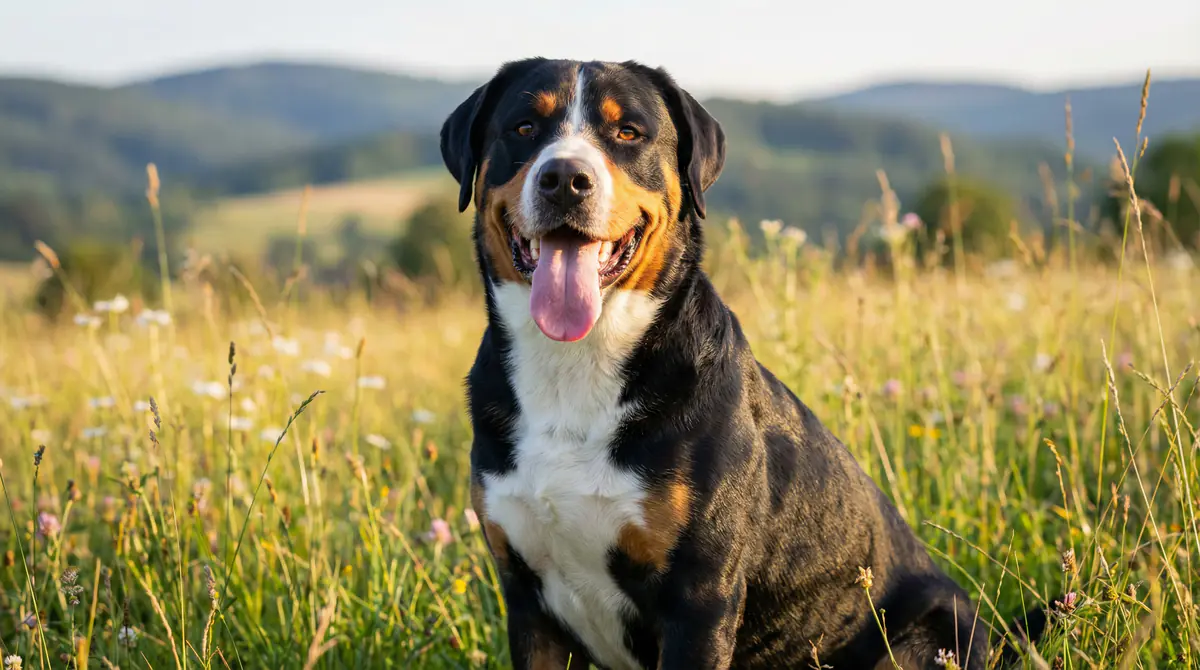
Greater Swiss Mountain Dogs mature slowly—your calculator trend should be read in months, not single weigh-ins. A lean, leggy teenager can still be normal while your veterinarian confirms condition.
Extra weight lands hard on a giant frame while growth plates are open; when vertical growth slows, many owners accidentally keep “puppy portions” and treat generosity alive—watch the log, not the begging face.
Hands-on rib checks and standing photos monthly beat guessing under a thick adult coat later.
Swissies are often sociable with family; that does not mean free feeding works—measured meals keep training and health data honest.
Stairs, repetitive jumping, and slippery floors deserve a conversation with your vet while your dog is still growing; management now prevents bad habits.
Teen regression in training is normal; lower difficulty, shorten sessions, and pay generously for basics again.
A fase de filhote não é um único estágio. É uma pilha de problemas e vitórias diferentes. Use isto como uma linha do tempo, não como um manual rígido.
Routine, handling, calm exposure.
Leash skills before strength wins.
Joint care + clear training.
Adult fill arrives late.
Selecionamos estes produtos para ajudar você a cuidar melhor do seu cão no dia a dia—do sono a passeios mais seguros, alimentação mais fácil e uma casa bem organizada. Cada espaço foi reduzido a opções bem avaliadas que combinam com o porte e a fase do seu cão.
Alimentação, exercício, adestramento, organização da casa e prevenção. Cada bloco foi escrito para quem acabou de conferir a curva de peso do filhote.
Your veterinarian may recommend a large-breed puppy formulation to align calories and minerals with steady—not racing—growth.
Split meals if your dog gulps; slower eating is easier on digestion and pairs with calmer post-meal routines many deep-chested owners prefer.
Treats are food; polite giants still overeat if every trick is paid in extra dinner.
Moderate walks, sniffing, and free play on forgiving surfaces beat repetitive hard pounding while young.
End before overtired mouthiness; giant puppies get clumsy when exhausted.
Heat planning matters in summer—shade, water, and shorter sessions.
Cooperation beats confrontation; heavy dogs learn best when training feels fair and predictable.
Socialization is pairing and distance—new experiences with a relaxed body, not forced greetings.
Teach door manners and calm sits before affection so jumping does not scale with weight.
Secure fencing and latches; adolescent Swissies test boundaries with mass.
Rotate enrichment—chews, puzzles, and training—to replace digging or barking hobbies.
Hips, elbows, eyes, and splenic torsion topics appear in breed education; your vet personalizes what to watch for.
Dental tolerance training while young makes lifelong care easier.
Parasite control should match your region and lifestyle.
Se estiver em dúvida, ligue para o veterinário, especialmente com filhotes. Esta lista não é completa e não cobre todas as situações. É um lembrete geral de sinais que muitas clínicas querem saber.
Informação educativa geral apenas. Não é orientação médica e não substitui exame ou plano de tratamento de um veterinário licenciado. Estimativas e dicas não diagnosticam doença nem emergências; entre em contato com seu veterinário diante de qualquer preocupação de saúde.
Bold, faithful, and dependable
Working
Grande
8-11 years
24 meses
Swissy
115-140 lbs
25.5-28.5" de altura
85-110 lbs
23.5-27" de altura
The Greater Swiss Mountain Dog is the oldest Swiss Sennenhund type, historically used for drafting, farm work, and guarding in Alpine valleys.
They mature slowly; teenage gangliness lasts longer than in small breeds.
Modern Swissies are family dogs with real exercise needs; bored adolescents are strong and persistent.
A calculadora usa a idade e o peso atuais do seu filhote para estimar o tamanho adulto. Como os filhotes crescem mais rápido no início e depois desaceleram ao amadurecer, a estimativa se ajusta à fase de crescimento em que o seu Boiadeiro suíço está.
Cães da raça Boiadeiro suíço costumam estar perto do tamanho completo por volta dos 24 meses. Conforme o filhote envelhece e mais do crescimento já foi concluído, a estimativa costuma ficar mais confiável.
A maioria dos Boiadeiro suíço adultos fica numa faixa típica de peso de 85-140 lbs. Você pode usar a calculadora com filhotes mais jovens, mas as estimativas costumam ser mais precisas depois de cerca de 12 semanas.
Compartilhe o PetCareCalc com outros tutores ou salve o link para voltar depois.
Experimente também: Calculadora de idade canina (anos de cão e anos humanos) · Quiz de raças
Adicione nossa calculadora gratuita e incorporável ao seu site.
Ainda rolando a página?
Cinco toques rápidos, um match na hora e um link para o grupo do chat. Grátis, sem cadastro.
ComeçarPrevendo o crescimento do seu Boiadeiro suíço