Gráfico personalizado
Introduce edad y peso para ver la trayectoria de crecimiento de tu perro.
¿Cuánto crecerá mi Teckel (dachshund)? Estima el peso adulto y sigue el desarrollo de tu cachorro.
Elegimos estas categorías para el día a día: descanso, paseos más cómodos, comidas sin líos y un hogar que encaje con tu situación. En cada hueco priorizamos artículos muy valorados que tienen sentido con la talla y la etapa de tu perro.
Transportines amplios
Camas cómodas
Arneses listos para salir
Comederos anti-glutonismo
Dachshund puppies are long, low, and convinced they are apex predators. Your growth estimate should sit next to back safety, weight discipline, and the hound nose that finds calories you forgot existed.
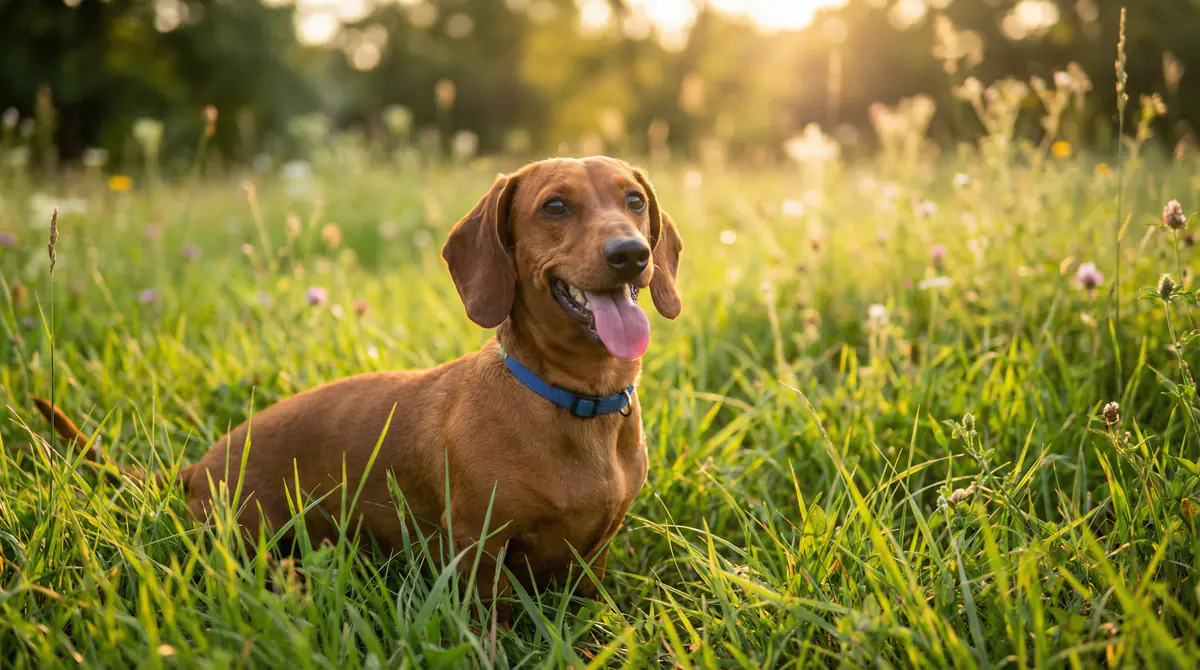
Extra ounces load a long spine disproportionately; lean is protective.
Puppy pudginess should not linger after growth slows; ask your vet to show you rib checks.
If the chart says fine but the waist disappears, trust condition over the midpoint.
Sudden reluctance to jump, hunched posture, or crying when lifted can be back pain; stop rough play and call your vet.
IVDD awareness is part of responsible ownership; prevention beats emergency surgery when you can help it.
Coat can hide weight; palpate ribs regularly.
La etapa de cachorro no es una sola fase: es una pila de retos y victorias distintas. Úsalo como línea temporal, no como reglamento rígido.
Potty, sleep, handling, and management.
Leash and leave it under distraction.
Recall on long line; weight vigilance.
Keep lean, keep kind training.
Elegimos estas categorías para el día a día: descanso, paseos más cómodos, comidas sin líos y un hogar que encaje con tu situación. En cada hueco priorizamos artículos muy valorados que tienen sentido con la talla y la etapa de tu perro.
Alimentación, ejercicio, adiestramiento, rutina en casa y prevención. Cada bloque va dirigido a quien acaba de mirar la curva de peso de su cachorro.
Measured meals; free feeding and Dachshunds is a common obesity path.
Your vet picks the right growth diet; do not chase “round puppy” aesthetics.
Training treats must be tiny and counted.
Walks plus sniffing count as real work.
Jumping down is higher risk than jumping up for many long backs.
Swimming can be excellent when safe and supported; ask your vet.
Fair expectations: recall may never be perfect off leash in open areas.
Reward generously for small wins; stubborn is often underpaid.
Socialization includes sounds and surfaces at easy distances.
Ramps, blocked stairs, and no “fly off the couch” culture.
Assume they will find dropped food under furniture.
Dental and vaccine plans per your vet.
Discuss IVDD signs so you know what warrants urgent care.
Weight counseling at visits; backs feel every pound.
Si tienes dudas, llama a tu veterinario, sobre todo con cachorros. Esta lista no es exhaustiva ni cubre todas las situaciones: es un recordatorio general de señales que muchas clínicas quieren conocer.
Información educativa general únicamente. No es consejo médico ni sustituye la exploración ni el plan de un veterinario colegiado. Las estimaciones y recomendaciones no diagnostican enfermedad ni urgencias; ante cualquier problema de salud, contacta con tu clínica.
Friendly, curious, and spunky
Hound
Pequeño
12-16 years
12 meses
Wiener Dog, Doxie, Standard Dachshund, Longhaired Dachshund, Smooth Dachshund, Wirehaired Dachshund
16-32 lb
8-9" de altura
16-32 lb
8-9" de altura
Dachshunds were developed in Germany to go to ground after badgers and other burrow animals. A flexible spine, loud voice, and fearless attitude were job requirements long before they were meme material.
Miniature sizes were later standardized for smaller quarry. The same hunting nerve appears in both sizes, just in different packaging.
Modern Dachshunds are mostly companions, but the original job explains digging, barking, and stubborn charm. It also explains why jumping off furniture and obesity are not “cute quirks,” they are orthopedic risks.
La calculadora toma la edad y el peso actuales de tu cachorro para estimar el tamaño adulto. Como los cachorros crecen más rápido al principio y luego se desaceleran, la estimación se adapta a la fase de crecimiento en la que está tu Teckel (dachshund).
Con la raza Teckel (dachshund), lo habitual es estar casi en el tamaño adulto hacia los 12 meses. A medida que tu cachorro es mayor y ya ha completado más crecimiento, la estimación suele volverse más fiable.
La mayoría de los Teckel (dachshund) adultos se sitúan en un rango típico de 16-32 lb. Puedes usar la calculadora con cachorros muy jóvenes, pero las estimaciones suelen ser más precisas a partir de unas 12 semanas.
Respuestas directas sobre talla, crecimiento, alimentación y cómo usar esta calculadora junto a tu veterinario.
Standard Dachshunds are often quoted around 16–32 lb as adults, with miniatures smaller (this calculator’s breed entry reflects the standard size). Even a few extra pounds show up fast on a long, low frame, so steady condition usually lines up with an easier-moving adult. Compare your pup to its own trend and to parent size when you know it.
Their proportions put more load on the middle of the body than on a taller dog of the same weight. Extra padding changes how they jump, climb stairs, and play in the house. If the chart says “fine” but the waist disappears, trust body condition over the midpoint. Ramps, couch rules, and carrying on stairs when the jump is huge keep wear-and-tear hobbies from becoming daily habits.
Many are largely done growing in height by about a year, but appetite and scavenging instinct do not turn off—that is when easy weight gain shows up if food stays generous. Weigh every few weeks on the same scale and take monthly photos from above. Stick to measured meals unless a professional feeding plan says otherwise.
Walks plus sniffing count as real work. Jumping down from beds or couches is often harder on the body than jumping up for many long, low dogs—ramps and house rules beat “they’ll learn.” Use a harness to reduce neck strain on leash walks. If play looks off—sudden reluctance to use stairs or furniture—switch to easy sniff walks until your pup moves freely again.
It models typical timing for the breed entry you selected; hounds follow scent and opportunity, so calories found on walks or counters can change the real-world curve. Log weights consistently and secure trash, cat food, and kid snacks. If you have both standard and miniature Dachshunds in the family, use the matching breed page so growth expectations align.
Comparte PetCareCalc con otras personas con mascota o guarda el enlace para volver cuando quieras.
Prueba también: Calculadora de edad canina (años caninos y humanos) · Test de razas
Añade gratis nuestra calculadora incrustable a tu web.
¿Sigues por aquí?
Cinco toques rápidos, una recomendación instantánea y un enlace para compartir. Gratis, sin registro.
EmpezarEstimando el crecimiento de tu Teckel (dachshund)